
Dahej's LNG and Petrochemical Expansion: What It Means for Gujarat's Industrial Infrastructure
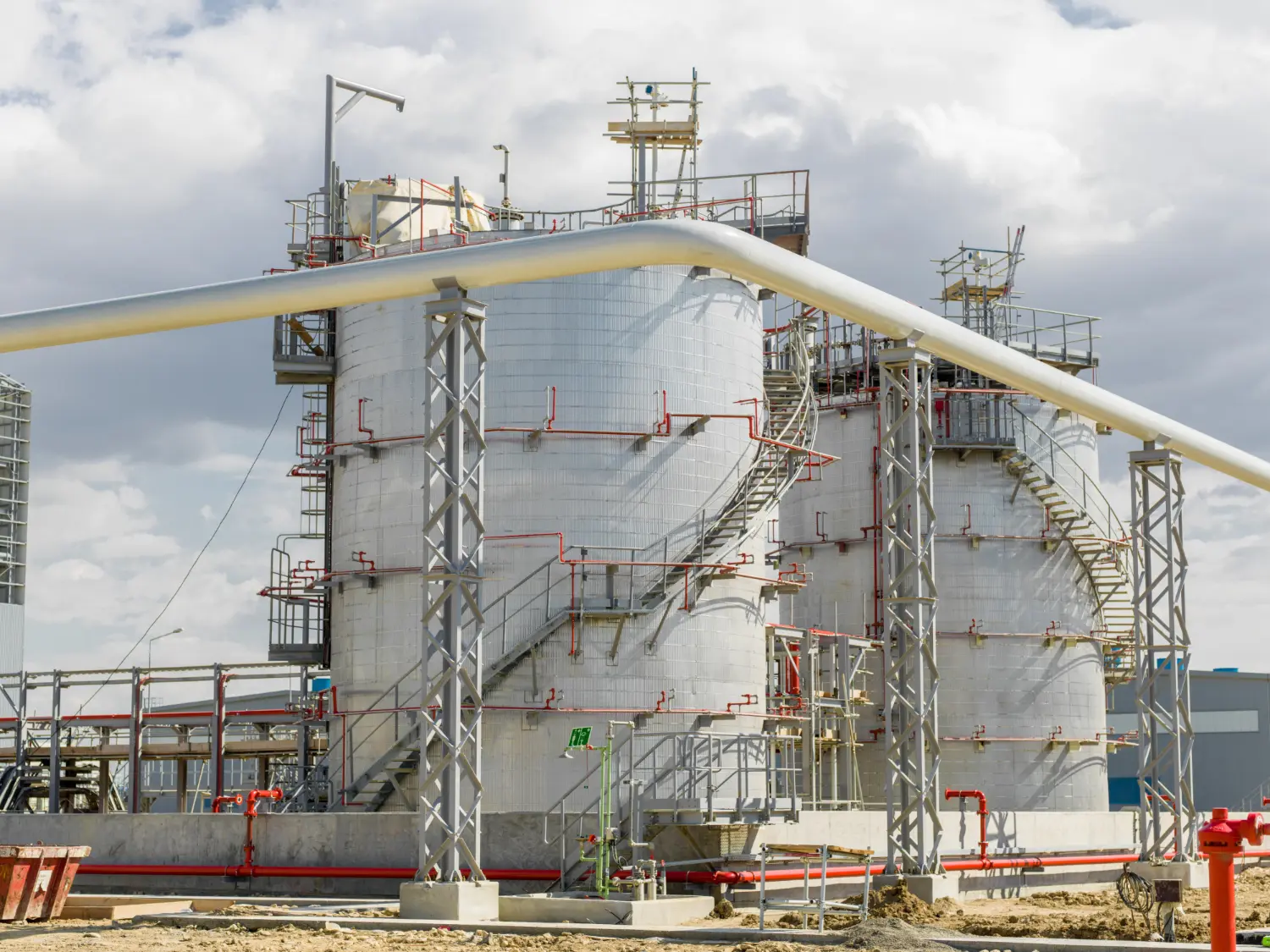
Dahej has become one of the most important industrial and energy infrastructure locations in Gujarat.
Located in Bharuch district on the Gulf of Khambhat, the Dahej industrial region combines LNG infrastructure, chemical and petrochemical manufacturing, port connectivity, pipelines, water infrastructure and industrial utilities.
The scale of this ecosystem is continuing to evolve.
A major recent development came in April 2026, when Petronet LNG commissioned additional regasification facilities at its Dahej terminal, increasing the terminal's nameplate regasification capacity from 17.5 MMTPA to 22.5 MMTPA.
This is not simply an LNG-terminal development.
An expansion of energy infrastructure can create requirements across a much wider industrial ecosystem:
- Gas pipelines
- Industrial pipelines
- Water supply
- Wastewater treatment
- Effluent management
- Pumping stations
- Electrical infrastructure
- Instrumentation
- Automation
- Civil infrastructure
- Maintenance and O&M
For an EPC infrastructure company operating in Gujarat, this makes Dahej an important market to understand.
OmYash Projects provides EPC and infrastructure solutions across cross-country pipelines, hydrocarbon infrastructure, water infrastructure, wastewater treatment, effluent treatment and lift irrigation.
Why Dahej Is Important to Gujarat's Industrial Economy
Dahej is not simply an industrial estate.
It is part of a much larger industrial and energy ecosystem.
The Gujarat government's Industrial Policy identifies the Petroleum, Chemicals and Petrochemicals Investment Region (PCPIR) at Dahej as a 453 sq. km investment region designed for petroleum, chemicals and petrochemicals manufacturing. The policy also highlights the region's connectivity through major infrastructure corridors.
GIDC describes the Dahej PCPIR as a specifically delineated investment region in Bharuch district, close to chemical estates, a chemical port terminal and LNG infrastructure.
This concentration of industries creates a particularly strong requirement for shared infrastructure.
The 2026 Dahej LNG Expansion
The most important recent development for this article is Petronet LNG's expansion of its Dahej terminal.
Petronet LNG's official announcement dated 1 April 2026 confirms commissioning of additional LNG regasification facilities at Dahej and the increase in nameplate capacity from 17.5 MMTPA to 22.5 MMTPA.
Petronet LNG's August 2026 results further confirm that the company was operating the Dahej terminal on the new 22.5 MMTPA capacity basis during Q1 FY2026-27.
This makes Dahej particularly relevant for infrastructure companies because additional energy-handling capacity needs reliable connections to the downstream industrial network.
What Does LNG Regasification Mean?
Liquefied Natural Gas, or LNG, is natural gas cooled to a very low temperature so that it becomes liquid.
This significantly reduces its volume, allowing LNG to be transported by specialised carriers.
At an LNG terminal, the LNG is unloaded and stored before being converted back into gaseous natural gas through a process known as regasification.
The gas can then enter transmission and distribution infrastructure.
A simplified system is:
LNG Carrier → Marine Terminal → LNG Storage → Regasification → Gas Pipeline → Industrial/Commercial Consumers
Every stage requires specialised infrastructure.
Why Pipeline Infrastructure Matters After Regasification
An LNG terminal only becomes part of the wider energy system when gas can be transported to consumers.
This creates demand for:
- Transmission pipelines
- Distribution pipelines
- Industrial gas connections
- Metering
- Valves
- Pressure-control systems
- Monitoring
- SCADA
Gujarat already has an extensive gas infrastructure ecosystem, and PNGRB's current authorisation information includes several Gujarat-related pipeline connectivity developments.
This makes pipeline infrastructure a natural extension of Dahej's LNG growth.
A New Dahej Ethylene Pipeline Connection
There is another important development that strengthens the industrial-infrastructure story.
PNGRB published a 2025 public consultation concerning an application by Deepak Chem Tech Limited for a dedicated ethylene pipeline from Reliance Industries Limited's Dahej facility to Deepak Chem Tech Limited at Dahej.
This is an important signal because it demonstrates how pipeline infrastructure in Dahej is not limited to natural gas.
Pipelines can also become critical infrastructure for moving petrochemical feedstocks between industrial facilities.
The industrial model increasingly becomes:
Port → Storage → Processing → Pipeline → Manufacturing → Downstream Industry
That is exactly the kind of interconnected infrastructure environment in which EPC capabilities become important.
Why Petrochemical Infrastructure Needs Integrated EPC
A petrochemical or hydrocarbon project typically involves multiple engineering disciplines.
These can include:
Civil Engineering
Foundations, structures, pipe supports, roads, drainage and utility infrastructure.
Mechanical Engineering
Pipelines, pumps, valves, equipment and mechanical systems.
Electrical Engineering
Power distribution, motors, switchgear and protection.
Instrumentation
Pressure, flow, temperature and process monitoring.
Automation
Control systems, SCADA and plant monitoring.
Pipeline Engineering
Route design, hydraulic analysis, material selection, welding, testing and commissioning.
The individual components must work together.
This is why integrated EPC delivery can be particularly valuable for industrial infrastructure.
OmYash's services include cross-country pipelines for water, oil and gas as well as hydrocarbon infrastructure.
Dahej's Industrial Infrastructure Requires Reliable Water
Energy and petrochemical facilities also depend heavily on water infrastructure.
Water may be required for:
- Industrial processes
- Cooling
- Utilities
- Fire protection
- Cleaning
- Boiler systems
- Domestic requirements
A large industrial ecosystem therefore requires reliable water transmission, storage and treatment infrastructure.
GIDC's Dahej PCPIR infrastructure information identifies substantial water-supply infrastructure serving the industrial region. Its published information describes existing Narmada-linked raw-water supply and additional water-supply schemes planned for the PCPIR.
This highlights an important point:
Industrial expansion requires water infrastructure to expand alongside manufacturing capacity.
Wastewater Infrastructure Is Equally Important
Industrial water consumption inevitably creates wastewater.
But petrochemical and chemical industries may generate complex effluent streams that require specialised treatment.
This can create demand for:
- ETPs
- CETPs
- Wastewater pipelines
- Pumping stations
- Sludge-management systems
- Water-recycling systems
OmYash's effluent treatment services focus on industrial wastewater treatment, contaminant removal, wastewater-management consulting and sustainable treatment systems.
This gives OmYash a direct connection to the type of infrastructure required by Gujarat's chemical and petrochemical ecosystem.
Why Industrial Water and Hydrocarbon Infrastructure Are Connected
At first glance, water infrastructure and hydrocarbon infrastructure may appear to be separate industries.
In a large industrial zone, however, they are interconnected.
Consider a petrochemical facility:
Natural Gas/Hydrocarbon Feedstock → Processing → Manufacturing → Water Consumption → Wastewater → Treatment → Reuse/Disposal
The industrial facility therefore needs both energy infrastructure and water infrastructure.
This is why multidisciplinary EPC companies can have an advantage in complex industrial environments.
Dahej as a Multimodal Industrial Infrastructure Hub
Dahej benefits from a combination of industrial and transport infrastructure.
Gujarat's official port information identifies Dahej as a location with LNG and chemical-terminal infrastructure, while the state has also developed road and rail connectivity around the industrial region.
This creates a multimodal ecosystem:
Port + LNG + Chemicals + Petrochemicals + Pipelines + Roads + Rail + Water + Utilities
Such concentration can reduce logistics barriers for industries while increasing demand for sophisticated infrastructure systems.
Why Cross-Country Pipelines Matter to Gujarat's Industrial Growth
Pipelines allow large volumes of material to be transported continuously over long distances.
Compared with repeated road transportation, pipeline systems can offer advantages in:
- Continuous flow
- Operational efficiency
- Reduced road dependence
- Controlled transportation
- Long-term capacity
However, pipeline projects require significant engineering.
A cross-country system may involve:
- Route surveys
- Land and right-of-way
- Hydraulic analysis
- Pipe selection
- Welding
- Coating
- Crossings
- Testing
- Commissioning
- Monitoring
OmYash's cross-country pipeline capability covers transportation infrastructure for water, oil and gas.
Pipeline Construction in an Industrial Corridor Is Different
A pipeline built through an undeveloped corridor has different challenges from one built inside a mature industrial region.
Dahej contains existing:
- Pipelines
- Plants
- Roads
- Utilities
- Port infrastructure
- Industrial facilities
A new pipeline may therefore need to cross or interface with existing infrastructure.
Engineering teams must identify:
- Existing utilities
- Pipeline corridors
- Road crossings
- Plant interfaces
- Safety zones
- Access routes
This increases the importance of accurate surveying and construction planning.
Safety Is Critical in Hydrocarbon Infrastructure
Hydrocarbon infrastructure requires a high level of attention to safety.
Engineering needs to consider:
- Operating pressure
- Material integrity
- Welding quality
- Corrosion protection
- Leak detection
- Isolation systems
- Emergency shutdown
- Instrumentation
- Inspection
Safety considerations need to be incorporated from design through operation.
OmYash states that its hydrocarbon infrastructure services focus on safety, efficiency and environmental responsibility.
Instrumentation and SCADA in Modern Industrial Infrastructure
Large industrial systems increasingly depend on digital monitoring.
Instrumentation can monitor:
- Pressure
- Flow
- Temperature
- Tank levels
- Equipment status
SCADA systems can provide operators with centralised visibility.
For distributed pipeline infrastructure, digital monitoring can help operators identify abnormal conditions more quickly and manage assets more efficiently.
OmYash's project portfolio includes industrial work involving instrumentation and complete SCADA integration, demonstrating that digital control can form part of multidisciplinary infrastructure execution.
Why Dahej Creates Opportunities for EPC Companies
The expansion of Dahej's energy and petrochemical ecosystem can generate demand across multiple project categories.
These can include:
Pipeline EPC
Gas, hydrocarbon and industrial pipelines.
Water Infrastructure
Transmission, storage and distribution.
Wastewater Treatment
ETP, CETP and recycling infrastructure.
Pumping Infrastructure
Water, wastewater and industrial pumping systems.
Industrial Utilities
Civil, mechanical and electrical infrastructure.
Automation
Instrumentation, monitoring and SCADA.
The opportunity is therefore much larger than the LNG terminal itself.
OmYash's Relevance to Gujarat's Industrial Infrastructure
OmYash's service portfolio is unusually aligned with the infrastructure requirements of industrial regions such as Dahej.
The company works across:
- Cross-country pipelines
- Hydrocarbon infrastructure
- Water infrastructure
- Wastewater treatment
- Effluent treatment
- Lift irrigation and pumping systems
Its project portfolio also demonstrates experience in large pipeline, pumping, water and industrial infrastructure.
That combination allows OmYash to position itself around integrated industrial infrastructure, rather than a single construction discipline.
Why Gujarat Is Becoming a Strong Market for Integrated EPC
Gujarat's industrial development increasingly involves interconnected infrastructure.
Dahej is one example.
Dholera is another.
Vapi is another.
Across these industrial centres, companies require:
Land + Roads + Power + Water + Pipelines + Wastewater + Industrial Utilities
The growth of these systems creates opportunities for EPC contractors that can execute complex infrastructure packages.
The Future of Dahej's Industrial Infrastructure
The next phase of Dahej's development is likely to involve increasing integration between energy, manufacturing and supporting utilities.
The combination of LNG capacity expansion, petrochemical development and pipeline connectivity suggests a continued requirement for infrastructure that can move:
- Energy
- Feedstocks
- Water
- Treated wastewater
- Industrial materials
The infrastructure challenge will increasingly be about connectivity and integration.
A single industrial project may depend on several external networks operating reliably.
What This Means for Gujarat's EPC Market
The Dahej example demonstrates an important shift in infrastructure demand.
EPC companies are no longer competing only to construct individual assets.
They increasingly need to understand how different infrastructure systems interact.
A pipeline may connect two industrial facilities.
A water system may supply the plant.
An ETP may manage its wastewater.
A pumping station may maintain hydraulic performance.
SCADA may monitor the network.
All of these systems contribute to one industrial ecosystem.
Conclusion
Dahej's latest LNG expansion reinforces its position as one of Gujarat's most important energy and industrial infrastructure hubs.
Petronet LNG's 2026 commissioning increased the Dahej terminal's nameplate regasification capacity from 17.5 MMTPA to 22.5 MMTPA, while PNGRB's records show continuing development of pipeline connectivity around the Dahej industrial ecosystem.
At the same time, Gujarat's PCPIR framework and GIDC's infrastructure planning demonstrate the scale of the wider industrial ecosystem surrounding Dahej.
For EPC companies, this creates opportunities across:
- Hydrocarbon pipelines
- Industrial pipelines
- Water infrastructure
- Wastewater treatment
- Effluent treatment
- Pumping systems
- Electrical infrastructure
- Instrumentation
- SCADA
- O&M
OmYash Projects operates across these interconnected infrastructure categories through its EPC and infrastructure services.
To discuss a pipeline, hydrocarbon, water, wastewater or industrial infrastructure requirement in Gujarat, contact OmYash Projects.
FAQs
Why is Dahej important for Gujarat's industrial infrastructure?
Dahej is a major industrial and energy hub containing LNG, chemical, petrochemical, port and pipeline infrastructure. Gujarat's PCPIR framework identifies Dahej as a 453 sq. km investment region for petroleum, chemicals and petrochemicals.
What is the latest Dahej LNG development?
Petronet LNG commissioned additional regasification facilities at its Dahej terminal in April 2026, increasing its nameplate regasification capacity from 17.5 MMTPA to 22.5 MMTPA.
How does LNG infrastructure create demand for pipelines?
After LNG is regasified, natural gas needs to be transported through pipeline networks to industrial, commercial and other consumers. Additional industrial development can also require dedicated pipeline connections.
Is Dahej also important for petrochemical pipelines?
Yes. PNGRB records include a public consultation concerning a proposed dedicated ethylene pipeline from Reliance Industries' Dahej facility to Deepak Chem Tech Limited at Dahej.
Why does Dahej require water infrastructure?
Chemical, petrochemical and energy facilities require water for industrial processes, cooling, utilities, fire protection and other applications. GIDC's published PCPIR information identifies Narmada-linked water infrastructure serving the region.
Why is wastewater treatment important in Dahej?
Chemical and petrochemical activities can generate industrial wastewater requiring appropriate treatment, collection, recycling or disposal infrastructure. ETPs and CETPs can form important parts of industrial environmental infrastructure.
Does OmYash provide infrastructure services relevant to Dahej?
Yes. OmYash provides cross-country pipeline, hydrocarbon, water infrastructure, wastewater treatment and effluent-treatment services, which overlap with several infrastructure requirements of Gujarat's industrial corridors.