
GIDC's ₹660 Crore Vapi Effluent Pipeline Project: What It Means for Gujarat's Industrial Infrastructure
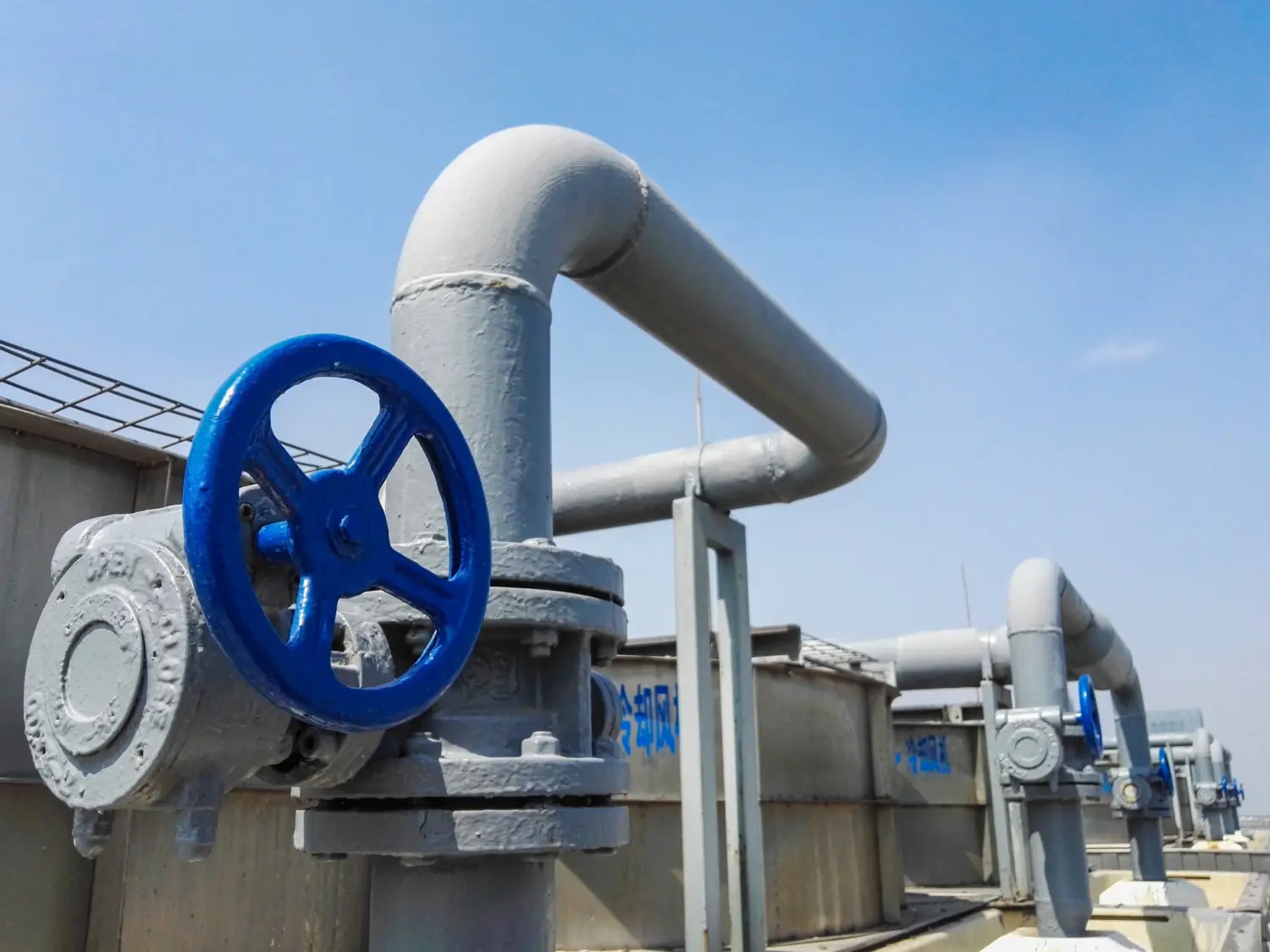
Gujarat's industrial infrastructure is entering a phase where wastewater management is becoming an increasingly important part of large-scale industrial development.
A major example is the Vapi industrial estate, where the Gujarat Industrial Development Corporation (GIDC) has invited bids for a large integrated effluent-disposal infrastructure project.
The project covers the engineering, procurement and construction (EPC), design, erection, testing and commissioning of a 70 MLD offshore and onshore effluent-disposal pipeline from the Vapi CETP to a selected deep-sea disposal location.
The scope also includes a pumping station, electro-mechanical works, allied infrastructure and five years of operation and maintenance. The official GIDC tender document lists an estimated project cost of ₹660.36 crore.
This is significant for Gujarat's infrastructure sector because the project brings together several engineering disciplines in one wastewater-infrastructure package:
CETP + Pipeline + Pumping Station + Civil Works + Electro-Mechanical Systems + Testing + Commissioning + O&M
For EPC companies operating in Gujarat, it also illustrates how industrial wastewater infrastructure is evolving from standalone treatment plants into large, integrated transmission and disposal systems.
OmYash Projects operates across water infrastructure, wastewater treatment, effluent treatment and pipeline EPC services, making this development particularly relevant to the company's core infrastructure expertise.
What Is the Vapi Effluent Pipeline Project?
The GIDC project is designed around the transportation of treated effluent from the Vapi Common Effluent Treatment Plant (CETP) to a designated deep-sea disposal location.
The tender specifies a 70 million litres per day (MLD) offshore and onshore effluent-disposal pipeline.
The project scope includes:
- EPC execution
- Detailed design
- Onshore pipeline
- Offshore pipeline
- Pumping station
- Electro-mechanical works
- Allied civil infrastructure
- Testing
- Commissioning
- Five-year O&M
The official GIDC tender document identifies the project as being at the Vapi industrial estate in Gujarat.
Why the Vapi Project Matters
The significance of the project goes beyond its ₹660 crore estimated value.
It demonstrates the scale of infrastructure required to support one of Gujarat's established industrial regions.
Vapi is associated with a major industrial ecosystem, and industrial development requires systems capable of managing wastewater at scale.
Instead of looking at wastewater as only a treatment problem, projects like this show the need to consider the complete infrastructure chain:
Industrial Units → Effluent Collection → CETP → Pumping → Transmission Pipeline → Disposal Infrastructure
Each part needs to work reliably for the overall system to function.
What Is a CETP?
A Common Effluent Treatment Plant, or CETP, is a centralised wastewater treatment facility designed to treat industrial effluent generated by multiple participating industrial units.
CETPs are particularly relevant in industrial estates where numerous industries generate wastewater with different characteristics.
A common treatment system can centralise:
- Effluent treatment
- Process monitoring
- Sludge management
- Water-quality management
- Treated-effluent handling
However, treatment is only one part of the infrastructure.
Once treated effluent leaves the CETP, it still needs to be transported and managed appropriately.
That is where a large effluent-disposal pipeline system becomes important.
Why a 70 MLD Pipeline Is Significant
MLD means million litres per day.
A 70 MLD system represents a designed flow of approximately:
70 million litres of effluent per day
That is a substantial volume.
For comparison, the daily flow requirement of such a system is equivalent to approximately 70,000 cubic metres per day.
Moving this volume reliably requires careful hydraulic and mechanical engineering.
The pipeline cannot simply be sized based on volume.
Engineers also need to evaluate:
- Flow rate
- Pipeline diameter
- Pressure
- Elevation
- Pumping requirements
- Friction losses
- Surge conditions
- Pipeline material
- Onshore alignment
- Offshore conditions
Why the Project Requires Both Onshore and Offshore Pipelines
The project is not limited to a conventional land-based pipeline.
The GIDC tender specifically covers offshore and onshore effluent-disposal pipelines leading from the Vapi CETP towards the selected deep-sea disposal location.
This creates two very different engineering environments.
Onshore Pipeline
The land-based section can involve:
- Excavation
- Road crossings
- Utility crossings
- Pipeline trenching
- Valve chambers
- Air valves
- Thrust blocks
- Pumping infrastructure
Offshore Pipeline
The marine section introduces additional considerations such as:
- Landfall
- Marine alignment
- Seabed conditions
- Pipeline protection
- Marine construction
- Diffuser arrangements
- Coastal environmental conditions
The transition between onshore and offshore infrastructure is therefore an important engineering interface.
Pumping Station Is a Critical Part of the System
The Vapi tender specifically includes a pumping station and electro-mechanical works.
A pumping station provides the energy required to transport treated effluent through the pipeline system.
A large pumping station may include:
- Pumps
- Motors
- Valves
- Headers
- Electrical systems
- Control panels
- Instrumentation
- Flow measurement
- Protection systems
Pump selection needs to be coordinated with the pipeline hydraulic profile.
An incorrectly selected pump can result in:
- Excessive energy consumption
- Inadequate flow
- Pressure problems
- Poor operating efficiency
This is why pumping and pipeline engineering need to be considered together.
Hydraulic Engineering Becomes Critical at This Scale
A 70 MLD pipeline system requires detailed hydraulic analysis.
Engineers may need to calculate:
- Design flow
- Velocity
- Static head
- Friction losses
- Minor losses
- Pump head
- Operating pressure
- Transient conditions
The objective is to ensure that the system can transport the required volume reliably.
Pipeline diameter is therefore not simply a matter of choosing the largest or smallest available pipe.
The design should balance:
Capital Cost + Pumping Energy + Hydraulic Performance + Lifecycle Cost
Water Hammer and Effluent Pipeline Systems
Long pressurised pipelines can be affected by transient pressure conditions.
A sudden pump shutdown or rapid valve operation can cause a pressure surge.
This phenomenon is commonly known as water hammer.
At large scale, transient analysis becomes an important part of pipeline engineering.
Depending on the hydraulic conditions, engineers may consider:
- Surge protection
- Air valves
- Controlled valve operation
- Pump-control systems
- Pressure-relief arrangements
The correct solution depends on the detailed hydraulic characteristics of the project.
What Makes an Offshore Effluent Pipeline Different?
An offshore pipeline operates in an environment that is significantly different from a conventional buried pipeline.
Engineers may need to consider:
- Seabed profile
- Marine currents
- Waves
- Coastal conditions
- Pipeline buoyancy
- External loads
- Corrosion
- Pipeline stability
- Installation methodology
The pipeline must remain stable and protected throughout its operating life.
The interface between the land-based pipeline and offshore section also requires careful engineering.
Landfall Is a Critical Interface
Where an onshore pipeline transitions into an offshore pipeline, a landfall arrangement is required.
The landfall must accommodate:
- Pipeline transition
- Structural loads
- Coastal conditions
- Access
- Inspection
- Protection
This is one of the technically sensitive parts of an offshore pipeline project.
The earlier GIDC tender documentation for this project includes dedicated engineering drawings for landfall and offshore pipeline components, illustrating the detailed nature of the infrastructure package.
Deep-Sea Disposal Requires Integrated Infrastructure
The project's purpose is not simply to transport effluent offshore.
The complete system must provide a controlled pathway from the CETP to the designated disposal location.
This means the infrastructure needs to integrate:
Treatment → Pumping → Pipeline → Landfall → Offshore Pipeline → Disposal System
Each stage affects the next.
For example, the treatment plant's output characteristics affect the disposal system.
The required flow affects pipeline design.
Pipeline pressure affects pump selection.
The marine environment affects offshore construction.
This makes the project a true multidisciplinary EPC assignment.
Why Testing and Commissioning Matter
The GIDC scope includes testing and commissioning.
This is particularly important because the project combines several interconnected systems.
Testing can involve verification of:
- Pipeline integrity
- Pump performance
- Valves
- Electrical systems
- Instrumentation
- Control systems
- Flow performance
Commissioning then confirms that the complete infrastructure can operate as an integrated system.
For large infrastructure projects, commissioning is not simply the final administrative step.
It is a critical stage in proving system performance.
Five Years of O&M Is Part of the Scope
Another significant aspect of the GIDC project is the inclusion of five years of operation and maintenance.
This demonstrates the importance of lifecycle performance.
For infrastructure of this scale, construction is only the beginning.
Long-term O&M can involve:
- Pump maintenance
- Valve maintenance
- Pipeline inspection
- Instrument calibration
- Electrical maintenance
- SCADA monitoring
- Corrosion monitoring
- Marine infrastructure inspection
The quality of the initial engineering and commissioning can therefore directly influence future operating performance.
What This Means for Gujarat's Industrial Infrastructure
The Vapi project highlights a broader shift in Gujarat.
Industrial infrastructure increasingly needs to address:
- Water supply
- Effluent treatment
- Wastewater transportation
- Industrial drainage
- Environmental infrastructure
- Resource recovery
- Long-term O&M
GIDC's current plug-and-play infrastructure framework already lists CETPs, sewage treatment plants, effluent treatment plants, water and drainage infrastructure and gas pipeline infrastructure among facilities supporting industrial development.
GIDC also states that it has developed more than 215 industrial estates, while its current website refers to 239 industrial estates across Gujarat.
That scale creates a substantial long-term requirement for industrial infrastructure.
Vapi Is Not an Isolated Infrastructure Market
The Vapi development is part of a wider industrial infrastructure environment in Gujarat.
GIDC's current project portfolio identifies multiple Special Investment Regions and industrial areas supporting sectors including:
- Chemicals
- Petrochemicals
- Pharmaceuticals
- Engineering
- Oil and gas
- Manufacturing
- Logistics
- Electronics
For example, GIDC's current project information identifies PCPIR for refinery downstream products and high-performance chemicals, Changodar for pharmaceuticals and oil and gas among other sectors, and Anjar for port and port-based industries.
This means demand for industrial water and wastewater infrastructure extends well beyond Vapi.
Why Industrial Wastewater Infrastructure Needs EPC Expertise
Large wastewater infrastructure projects combine multiple engineering disciplines.
A project can involve:
Process Engineering
Treatment and effluent-management requirements.
Hydraulic Engineering
Flow, pressure and pipeline calculations.
Civil Engineering
Pumping stations, chambers, foundations and supporting structures.
Mechanical Engineering
Pumps, valves, pipelines and mechanical equipment.
Electrical Engineering
Motors, power supply, control panels and protection.
Instrumentation
Flow, pressure and process monitoring.
Automation
SCADA and remote monitoring.
O&M
Long-term asset management.
An EPC partner needs to coordinate these interfaces rather than treating each component as a separate project.
Why This Development Is Relevant to OmYash
This is where the Vapi project becomes particularly relevant to OmYash's SEO and commercial positioning.
OmYash's current services portfolio explicitly includes:
- Water infrastructure projects
- Drinking water and wastewater treatment
- Effluent treatment projects
- Cross-country pipelines
- Hydrocarbon infrastructure
The company's website states that its ETP capability includes designing, engineering, installing and commissioning bespoke effluent-treatment systems, along with sludge management and water recycling.
That means the Vapi development sits directly at the intersection of several OmYash capabilities.
OmYash's Pipeline and Water Infrastructure Experience
OmYash also has first-hand project experience with large water-transmission systems.
Its portfolio includes the 18.8 km Jalampura to Watrak Dam MS pipeline project, designed for 100 cusecs of discharge, as well as an 8 km MS and HDPE pipeline project from Kuda Bhimpur to Davol/Nizampur Pond.
The company's project portfolio also demonstrates experience in lift irrigation, pumping infrastructure and large-scale pipeline execution.
This is useful because the engineering principles behind large water pipelines—hydraulic design, pumping, pipeline construction, testing and commissioning—also form important parts of complex wastewater infrastructure.
What Gujarat's Industrial Future Means for EPC Companies
Gujarat's industrial development is increasingly dependent on supporting infrastructure.
Industrial companies require more than land.
They require:
Water + Power + Roads + Pipelines + Wastewater + Drainage + Environmental Infrastructure
GIDC's current infrastructure model reflects this integrated approach. Its industrial estates provide or facilitate infrastructure such as water, drainage, gas, power and CETPs depending on requirements.
This creates opportunities for EPC companies that can deliver multiple infrastructure disciplines.
The Larger Trend: Wastewater Is Becoming Infrastructure
The Vapi project also highlights a larger shift in how industrial wastewater should be viewed.
Wastewater is no longer simply a treatment problem inside an individual factory.
At an industrial-estate scale, it becomes an infrastructure network.
That network can include:
Collection → CETP → Pumping → Pipeline → Disposal/Reuse
Each component requires engineering.
This is why future industrial developments will increasingly need integrated wastewater infrastructure planning.
What Comes Next for Gujarat's Industrial Wastewater Infrastructure?
As Gujarat continues developing industrial estates and Special Investment Regions, infrastructure requirements are likely to become increasingly sophisticated.
Future projects may combine:
- Advanced CETPs
- Effluent-disposal pipelines
- Water recycling
- ZLD systems
- SCADA
- Automated pumping
- Industrial water networks
- Treated wastewater reuse
The objective will increasingly be to manage water as a complete lifecycle rather than treating supply and wastewater as separate systems.
Conclusion
GIDC's ₹660.36 crore Vapi effluent-disposal pipeline project is an important example of the scale and complexity of Gujarat's industrial wastewater infrastructure.
The project combines a 70 MLD effluent-disposal pipeline with pumping, electro-mechanical infrastructure, offshore and onshore construction, testing, commissioning and five years of O&M.
More importantly, it demonstrates that industrial wastewater management increasingly requires integrated EPC infrastructure rather than isolated treatment equipment.
For Gujarat's industrial estates, the infrastructure chain is becoming:
Industrial Development → Water Supply → Production → Effluent Treatment → Pumping → Pipeline Transmission → Managed Disposal or Reuse
OmYash Projects operates across several of these infrastructure disciplines, including effluent treatment, wastewater infrastructure and pipeline EPC services.
To discuss a water, wastewater, effluent, pipeline or integrated EPC requirement in Gujarat, contact OmYash Projects.
FAQs
What is the Vapi effluent pipeline project?
It is a GIDC project involving the EPC, design, construction, testing and commissioning of a 70 MLD offshore and onshore effluent-disposal pipeline from the Vapi CETP to a selected deep-sea disposal location, along with a pumping station, electro-mechanical works, allied infrastructure and five years of O&M.
What is the estimated cost of the Vapi effluent pipeline project?
The official GIDC tender document lists the estimated project cost at approximately ₹660.36 crore.
What does 70 MLD mean?
70 MLD means 70 million litres per day. It represents the design flow capacity specified for the Vapi effluent-disposal pipeline project.
What is a CETP?
A Common Effluent Treatment Plant is a centralised facility designed to treat industrial effluent generated by multiple participating industrial units.
Why does the Vapi project require an offshore pipeline?
The GIDC project involves transporting treated effluent from the Vapi CETP to a selected deep-sea disposal location, requiring both onshore and offshore pipeline infrastructure.
What does an EPC contractor do in an effluent pipeline project?
An EPC contractor can manage engineering, procurement and construction, including pipeline design, civil works, pumping systems, mechanical and electrical works, instrumentation, testing and commissioning.
Does OmYash provide effluent and pipeline EPC services?
Yes. OmYash's current service portfolio includes effluent treatment projects, wastewater infrastructure and cross-country pipeline infrastructure.