
How Extreme Weather Is Reshaping Infrastructure Planning in India
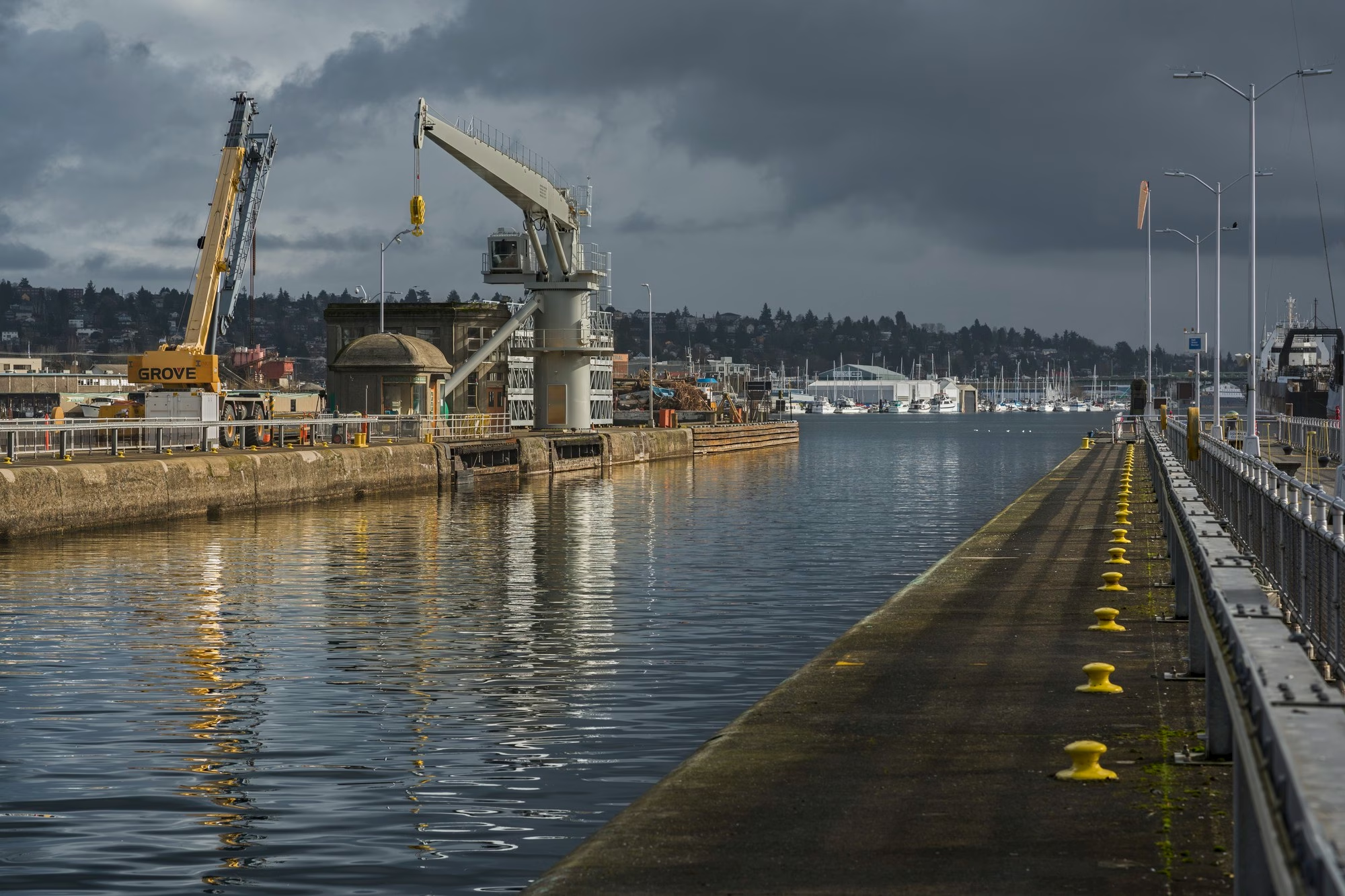
India has witnessed a sharp rise in extreme weather events over the past few years. From record-breaking heatwaves and prolonged droughts to intense monsoon rainfall, flash floods, and cyclones, changing climate conditions are placing unprecedented pressure on the country's infrastructure.
These events are no longer isolated incidents—they are becoming more frequent and severe. As a result, infrastructure planning is evolving to prioritize resilience, sustainability, and long-term adaptability. Modern engineering solutions are now designed not only to support economic growth but also to withstand climate-related challenges.
Through its expertise in water infrastructure and EPC solutions, OmYash Projects contributes to building resilient infrastructure that supports sustainable development across Gujarat and India.
Why Climate-Resilient Infrastructure Matters
Infrastructure built decades ago was designed based on historical climate patterns. Today, those assumptions are rapidly changing.
Modern infrastructure must be capable of handling:
- Extreme rainfall
- Prolonged heatwaves
- Water scarcity
- Flooding
- Cyclones
- Rapid urban growth
Climate resilience has become a key consideration during every stage of infrastructure planning, from design and engineering to construction and maintenance.
Heatwaves Are Increasing Water Demand
India continues to experience some of the hottest summers on record. Rising temperatures significantly increase demand for water across residential, agricultural, and industrial sectors.
Heatwaves also lead to:
- Faster evaporation from reservoirs
- Increased groundwater extraction
- Higher irrigation demand
- Greater pressure on urban water supply systems
To address these challenges, investments in dams, reservoirs, transmission pipelines, and lift irrigation systems are becoming increasingly important.
Heavy Rainfall Requires Better Flood Management
While some regions experience drought, others face extreme rainfall within short periods.
Without adequate infrastructure, heavy rainfall can cause:
- Urban flooding
- Dam overflow
- Road damage
- Riverbank erosion
- Disruption to water supply networks
Modern flood management depends on efficient reservoirs, spillways, drainage systems, and real-time monitoring technologies.
Several major infrastructure projects executed by OmYash Projects demonstrate how integrated engineering solutions help improve resilience against changing weather conditions.
Smart Water Infrastructure Is Becoming Essential
Traditional infrastructure alone is no longer sufficient to manage increasingly unpredictable weather patterns.
Modern systems now include:
- SCADA-based monitoring
- IoT-enabled sensors
- Automated pumping stations
- Reservoir level monitoring
- Digital control systems
These technologies provide real-time information that allows operators to respond quickly to changing environmental conditions.
As an experienced EPC infrastructure company, OmYash Projects understands the importance of combining engineering expertise with advanced technology.
Sustainable Infrastructure Supports Long-Term Growth
Infrastructure today must balance economic development with environmental responsibility.
This includes investments in:
Water Storage Infrastructure
Reservoirs and dams help manage seasonal rainfall and improve long-term water availability.
Efficient Pipeline Networks
Modern transmission systems reduce water losses while improving supply reliability.
Lift Irrigation Projects
These systems improve water accessibility for agriculture and rural communities.
Water Treatment Facilities
Treatment and reuse systems help reduce pressure on freshwater resources.
Explore the complete range of services offered by OmYash Projects to see how sustainable engineering supports resilient infrastructure development.
Technology Is Reshaping Infrastructure Planning
Engineering teams increasingly rely on advanced technologies to improve project planning and operational efficiency.
These include:
- Geographic Information Systems (GIS)
- Drone-based site surveys
- Building Information Modelling (BIM)
- Artificial Intelligence (AI)
- Predictive analytics
- Remote monitoring systems
These innovations enable infrastructure to adapt more effectively to changing environmental conditions.
Building Infrastructure for the Future
As climate risks continue to evolve, future infrastructure projects will focus on:
- Climate resilience
- Sustainable engineering
- Digital monitoring
- Smart water management
- Disaster preparedness
- Resource efficiency
Governments, infrastructure developers, and EPC companies all have a critical role to play in building systems that can support future generations.
Conclusion
Extreme weather is fundamentally changing the way infrastructure is planned, designed, and managed across India. Heatwaves, floods, droughts, and changing rainfall patterns require infrastructure that is stronger, smarter, and more resilient than ever before.
Investments in water infrastructure, dams, reservoirs, pipelines, lift irrigation systems, and digital monitoring technologies will play a vital role in ensuring sustainable growth and long-term climate resilience.
For expert guidance on resilient infrastructure development and EPC solutions, contact OmYash Projects to discuss your project requirements.
FAQs
How is extreme weather affecting infrastructure in India?
Extreme weather is increasing the need for climate-resilient infrastructure that can withstand floods, droughts, heatwaves, and changing rainfall patterns.
Why is climate-resilient infrastructure important?
Climate-resilient infrastructure reduces damage from extreme weather, improves public safety, and ensures reliable access to essential services such as water supply.
How does technology improve infrastructure planning?
Technologies such as GIS, AI, IoT sensors, SCADA systems, and drone surveys improve planning, monitoring, and operational efficiency.
What role do reservoirs play during extreme weather?
Reservoirs help store water during heavy rainfall, reduce flood risks, and provide reliable water supply during droughts.
How do EPC companies contribute to resilient infrastructure?
EPC companies design, engineer, construct, and maintain infrastructure projects that improve long-term sustainability, operational efficiency, and resilience against climate-related challenges.