
Sewage Treatment Plants for Gujarat Industries: How STP Infrastructure Supports Industrial Growth
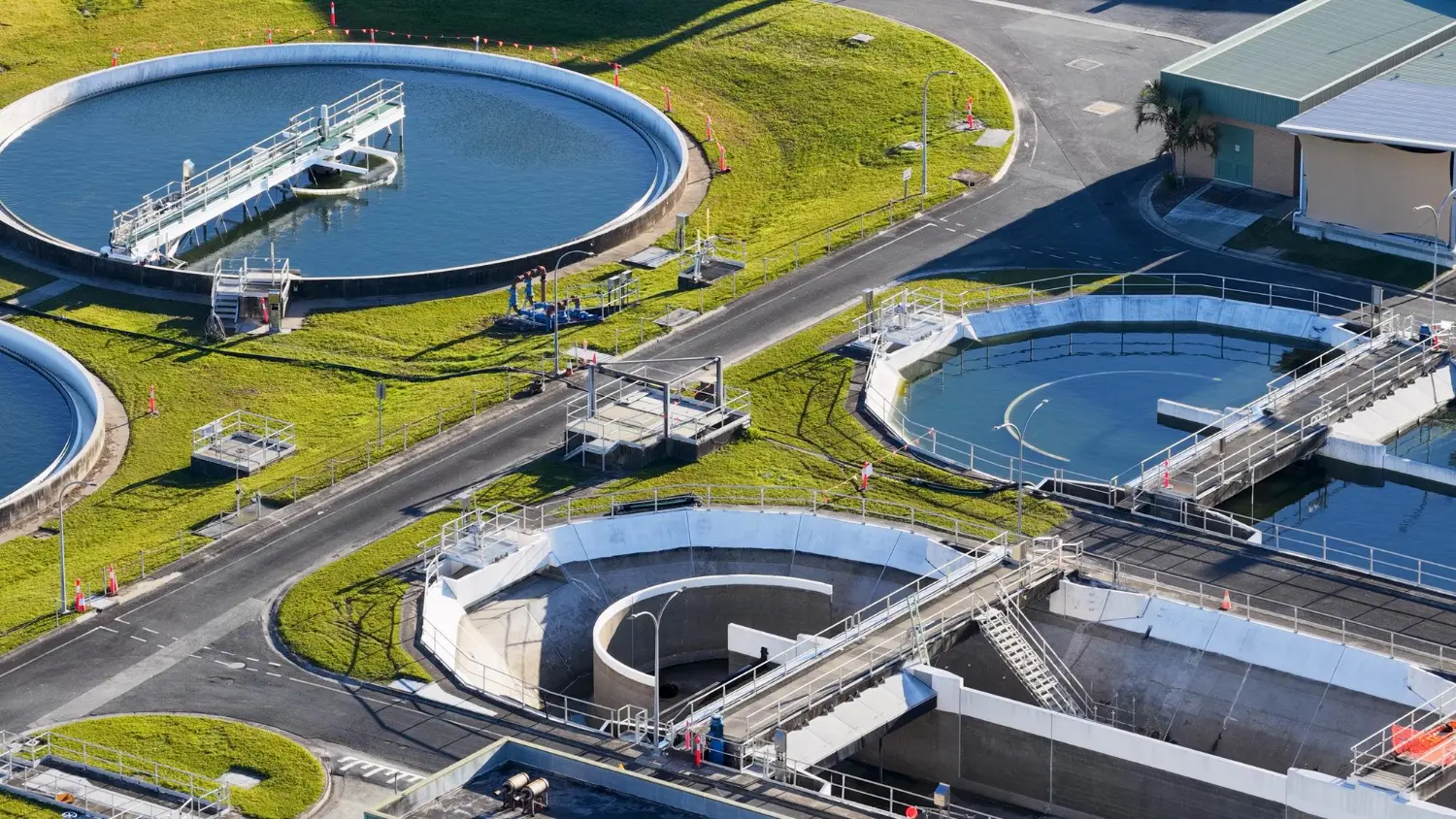
Gujarat's industrial development increasingly depends on infrastructure that can support not only production but also responsible management of water and wastewater.
Industrial estates, manufacturing facilities, commercial developments and large infrastructure projects require reliable systems for water supply, sewage collection, treatment and reuse.
A Sewage Treatment Plant (STP) is an important part of this infrastructure.
An STP treats domestic or municipal-type sewage generated by workers, offices, residential facilities and other non-industrial activities before the treated water is discharged or reused.
For Gujarat's growing industrial ecosystem, STP infrastructure can therefore form an important part of sustainable industrial development.
The relevance is particularly clear in Gujarat's industrial-estate planning. The Gujarat Industrial Development Corporation (GIDC) currently lists Sewage Treatment Plants, Effluent Treatment Plants and gas pipeline infrastructure among facilities available within its plug-and-play industrial infrastructure framework.
OmYash Projects provides drinking water and wastewater treatment solutions, including sewage treatment systems, wastewater treatment infrastructure and water recycling technologies for communities and industries.
What Is a Sewage Treatment Plant?
A Sewage Treatment Plant is a facility designed to treat sewage before the treated water is discharged or reused.
Sewage can contain:
- Organic matter
- Suspended solids
- Nutrients
- Pathogens
- Oils and grease
- Other contaminants
The purpose of an STP is to reduce these pollutants through a series of physical, biological and, where necessary, advanced treatment processes.
The exact treatment configuration depends on:
- Sewage characteristics
- Flow rate
- Required treated-water quality
- Space availability
- Reuse requirements
- Regulatory requirements
This means an STP should be engineered according to the application rather than selected purely on capacity.
Why STPs Matter for Gujarat's Industrial Infrastructure
Industrial development creates large concentrations of people and infrastructure.
Factories, industrial parks, offices, worker facilities and supporting developments generate sewage that needs to be managed.
A reliable STP helps create a complete water-management cycle:
Water Supply → Consumption → Sewage Collection → Treatment → Reuse/Discharge
This becomes particularly important in industrial estates where large numbers of facilities operate within a common area.
GIDC's current plug-and-play infrastructure framework specifically identifies STPs and ETPs as supporting infrastructure for industrial development.
STP vs ETP: What Is the Difference?
This is one of the most important distinctions for industrial projects.
STP
An STP primarily treats domestic sewage.
Typical sources include:
- Toilets
- Washrooms
- Canteens
- Offices
- Worker facilities
- Residential areas
ETP
An ETP treats industrial effluent generated by manufacturing or production processes.
Industrial effluent can contain chemicals, oils, metals, high organic loads or other process-specific contaminants.
The treatment requirements can therefore be very different.
A large industrial facility may actually require both an STP and an ETP.
The STP manages domestic sewage.
The ETP manages industrial wastewater.
OmYash provides both wastewater treatment and effluent treatment infrastructure, allowing these requirements to be considered as part of an integrated water-management strategy.
How Does an STP Work?
A typical sewage treatment process can involve several stages:
Collection → Screening → Equalisation → Primary Treatment → Biological Treatment → Clarification → Tertiary Treatment → Disinfection → Reuse/Discharge
Not every STP uses exactly the same configuration.
The treatment process is selected according to the wastewater characteristics and required output quality.
Stage 1: Sewage Collection
The treatment process begins before sewage reaches the plant.
A collection network transports sewage from buildings and facilities to the STP.
The collection system needs to be designed to account for:
- Flow
- Pipeline diameter
- Gradient
- Pumping requirements
- Peak loads
- Future expansion
Poor collection infrastructure can affect the performance of the treatment plant itself.
Stage 2: Screening
Screening removes larger materials from incoming sewage.
This protects downstream equipment from:
- Plastics
- Cloth
- Solid waste
- Other large debris
Screening is one of the simplest but most important stages of sewage treatment.
Stage 3: Primary Treatment
Primary treatment removes settleable solids and other materials that can be separated physically.
Processes may include:
- Sedimentation
- Primary clarification
- Grit removal
- Oil and grease separation
This reduces the load entering biological treatment.
Stage 4: Biological Treatment
Biological treatment is one of the central processes in many STPs.
Microorganisms break down biodegradable organic matter under controlled conditions.
Different biological treatment technologies can be used depending on:
- Plant capacity
- Land availability
- Effluent requirements
- Energy considerations
- Operating requirements
The treatment process should therefore be selected according to the project rather than simply choosing the most commonly used technology.
Stage 5: Secondary Clarification
After biological treatment, suspended biological solids need to be separated from the treated water.
Clarification allows treated water to move towards subsequent treatment stages while solids are managed separately.
Sludge handling therefore becomes an important part of the STP design.
Stage 6: Tertiary Treatment
Where higher treated-water quality is required, additional treatment may be introduced.
This can involve:
- Filtration
- Disinfection
- Membrane treatment
- Other advanced processes
The requirement depends on whether the treated water will be discharged or reused.
Stage 7: Disinfection
Disinfection reduces pathogens remaining in the treated water.
Depending on the system, technologies can include:
- Chlorination
- UV treatment
- Other approved disinfection processes
The appropriate method depends on project requirements and treated-water quality objectives.
Why Water Reuse Is Becoming More Important
An STP does not necessarily have to be designed only around discharge.
Treated wastewater can potentially become a resource.
Depending on its quality and intended use, treated water can be considered for applications such as:
- Landscaping
- Toilet flushing
- Cooling
- Construction
- Certain industrial utilities
- Other non-potable applications
Water recycling can reduce freshwater demand.
This is particularly relevant for industrial areas where water availability and operating costs are important considerations.
OmYash's water and wastewater treatment services include water recycling technologies as part of its broader approach to sustainable water management.
STP Infrastructure in Gujarat's Industrial Estates
Gujarat's industrial development model increasingly focuses on ready infrastructure that allows businesses to establish facilities more efficiently.
GIDC's Plug-and-Play framework currently lists infrastructure such as:
- Gas pipeline infrastructure
- Sewage Treatment Plants
- Effluent Treatment Plants
- Water supply connections
- Drainage infrastructure
- Other industrial utilities
This illustrates an important shift.
Wastewater management is increasingly being treated as part of the core industrial infrastructure package, rather than something added after an industrial facility is developed.
Why STP Design Must Consider Industrial Growth
An industrial estate may not operate at full capacity immediately.
The wastewater load can increase as:
- New companies join the estate
- Production expands
- Workforce increases
- Additional buildings are developed
Therefore, STP planning should consider both current and future requirements.
Engineers may need to evaluate:
- Current population
- Future population
- Average flow
- Peak flow
- Seasonal variations
- Future expansion
Designing only for today's demand can create capacity constraints later.
How STP Capacity Is Determined
STP capacity is generally linked to wastewater generation rather than simply the size of the land or building.
Important factors include:
- Number of users
- Water consumption
- Sewage generation percentage
- Peak flow
- Future expansion
- Industrial-estate occupancy
For example, an industrial park with hundreds of workers and support facilities may generate significantly different wastewater volumes from a small manufacturing unit.
Accurate demand estimation is therefore an important part of project engineering.
Why Peak Flow Matters
Sewage generation is not constant throughout the day.
Certain periods may experience significantly higher flows.
An STP needs to accommodate these variations.
If the plant is designed only around average flow, peak conditions may affect treatment performance.
Engineers therefore consider:
- Average daily flow
- Peak hourly flow
- Peak factors
- Equalisation requirements
This helps the plant operate more consistently.
Sludge Management in STPs
Treatment creates sludge.
Sludge can originate from:
- Primary clarification
- Biological treatment
- Secondary clarification
The STP therefore needs a strategy for:
- Sludge thickening
- Dewatering
- Storage
- Handling
- Disposal or further treatment
Sludge management should be considered during the original design.
Ignoring this component can create operational difficulties even if the water-treatment process itself performs correctly.
Automation and SCADA for STP Plants
Modern STPs can incorporate automation and digital monitoring.
Instrumentation can monitor parameters such as:
- Flow
- pH
- Tank levels
- Dissolved oxygen
- Pump status
- Equipment alarms
SCADA systems can bring information from multiple plant systems into a central interface.
This allows operators to monitor plant performance more efficiently.
Automation can also help reduce dependence on manual intervention and improve consistency.
OmYash's broader project experience includes instrumentation and SCADA integration within industrial infrastructure projects, demonstrating the relevance of automation to integrated infrastructure execution.
STP and Industrial Water Management Should Be Planned Together
An industrial facility can have several water systems operating simultaneously.
For example:
Raw Water → Water Treatment → Industrial Use
and:
Domestic Use → Sewage Collection → STP → Reuse
while:
Industrial Process → Effluent → ETP → Reuse/Discharge
Keeping these systems separate where necessary and integrating them strategically can improve overall water management.
This is particularly important when industries want to increase water reuse.
Common STP Challenges
Variable Sewage Flow
Population and workforce numbers can fluctuate.
Limited Land
Industrial sites may have restricted space for treatment infrastructure.
Odour Management
Poorly designed or operated plants can create odour issues.
Sludge Handling
Improper sludge management can create operational problems.
Energy Consumption
Aeration and pumping can account for significant operating energy.
Poor O&M
Even a well-designed STP can underperform if it is not operated and maintained correctly.
These factors need to be considered during project planning.
Why Energy Efficiency Matters in STPs
STPs can consume significant energy, particularly during biological treatment and pumping.
Energy consumption can be influenced by:
- Blower efficiency
- Pump efficiency
- Aeration control
- Hydraulic design
- Automation
- Operating conditions
Modern treatment plants can therefore benefit from energy-efficient equipment and process control.
The objective is not simply to achieve treated-water quality.
It is to achieve it efficiently.
Choosing an STP EPC Partner in Gujarat
When selecting an STP contractor, organisations should look beyond equipment supply.
Important questions include:
- Does the company understand wastewater treatment?
- Can it provide project-specific engineering?
- Can it execute civil works?
- Can it integrate mechanical and electrical systems?
- Does it provide instrumentation and automation?
- Can it manage commissioning?
- Does it understand water recycling?
- Can it support operation and maintenance?
An integrated EPC approach can simplify coordination between treatment, civil, mechanical, electrical and automation systems.
OmYash's Wastewater Treatment Capability
OmYash's actual service portfolio includes Drinking Water & Waste Water Treatment.
The company states that it works on water treatment plants, purification systems and wastewater treatment technologies for communities and industries. Its homepage also specifically mentions experience in the construction of sewage treatment plants, industrial wastewater systems and water recycling technologies.
This makes STP infrastructure a natural commercial topic for OmYash rather than a generic SEO subject.
Explore OmYash's wastewater treatment services or review its infrastructure project portfolio to understand the company's broader project-execution capabilities.
Gujarat's Growing Need for Wastewater Infrastructure
The scale of wastewater infrastructure required across Gujarat is significant.
A 2025 Lok Sabha response published by PIB reported 1,582.4 MLD of STP capacity developed in Gujarat under AMRUT.
This demonstrates that sewage treatment is already a major infrastructure category in the state.
At the industrial level, GIDC's current infrastructure framework further demonstrates the importance of STP and ETP facilities within industrial development.
Together, these developments point towards continuing demand for wastewater infrastructure across urban, industrial and institutional applications.
STPs as Part of Sustainable Industrial Infrastructure
The role of an STP is evolving.
It is no longer simply a facility for treating sewage before disposal.
A modern wastewater strategy can combine:
- Treatment
- Reuse
- Recycling
- Energy optimisation
- Digital monitoring
- Sludge management
This changes the way infrastructure developers should think about wastewater.
The objective becomes:
Treat → Recover → Reuse → Reduce freshwater demand
rather than simply:
Treat → Discharge
Conclusion
Sewage treatment plants are becoming an increasingly important component of Gujarat's industrial and urban infrastructure.
As industrial estates, manufacturing facilities and supporting developments expand, wastewater management needs to be planned alongside water supply, drainage, utilities and other infrastructure.
A successful STP requires much more than treatment equipment.
It requires:
- Accurate capacity planning
- Hydraulic design
- Treatment-process selection
- Civil construction
- Mechanical equipment
- Electrical systems
- Instrumentation
- Automation
- Sludge management
- Testing
- Commissioning
- O&M
For Gujarat industries and infrastructure developers, the right approach is to design wastewater infrastructure around current requirements while allowing for future growth and water reuse.
OmYash Projects provides wastewater and sewage treatment infrastructure solutions for communities and industries, backed by broader EPC and infrastructure capabilities.
To discuss an STP, wastewater treatment or integrated water infrastructure requirement, contact OmYash Projects.
FAQs
What is a Sewage Treatment Plant?
A Sewage Treatment Plant is a facility that treats domestic sewage through physical, biological and sometimes advanced treatment processes before the treated water is discharged or reused.
What is the difference between an STP and an ETP?
An STP primarily treats domestic sewage, while an ETP is designed to treat industrial effluent generated by manufacturing or industrial processes. Large industrial facilities may require both.
Do industries in Gujarat need STPs?
Industrial facilities, industrial estates and other developments may require sewage treatment infrastructure depending on their wastewater generation, location, approvals and applicable requirements. GIDC currently lists STPs among its plug-and-play industrial infrastructure facilities.
Can treated STP water be reused?
Yes. Depending on treated-water quality and the intended application, treated sewage can potentially be reused for suitable non-potable applications such as landscaping, flushing, cooling or other approved uses.
What are the main stages of sewage treatment?
A typical STP can include screening, primary treatment, biological treatment, clarification, tertiary treatment and disinfection. The exact process depends on wastewater characteristics and required treated-water quality.
Why is sludge management important in an STP?
Treatment produces sludge that must be thickened, dewatered, stored and appropriately managed. Sludge handling should therefore be incorporated into STP design from the beginning.
Does OmYash provide STP EPC services in Gujarat?
OmYash provides drinking water and wastewater treatment infrastructure, including sewage treatment plant and wastewater treatment solutions for communities and industries.