
What Happens When Reservoir Levels Fall Below Critical Capacity?
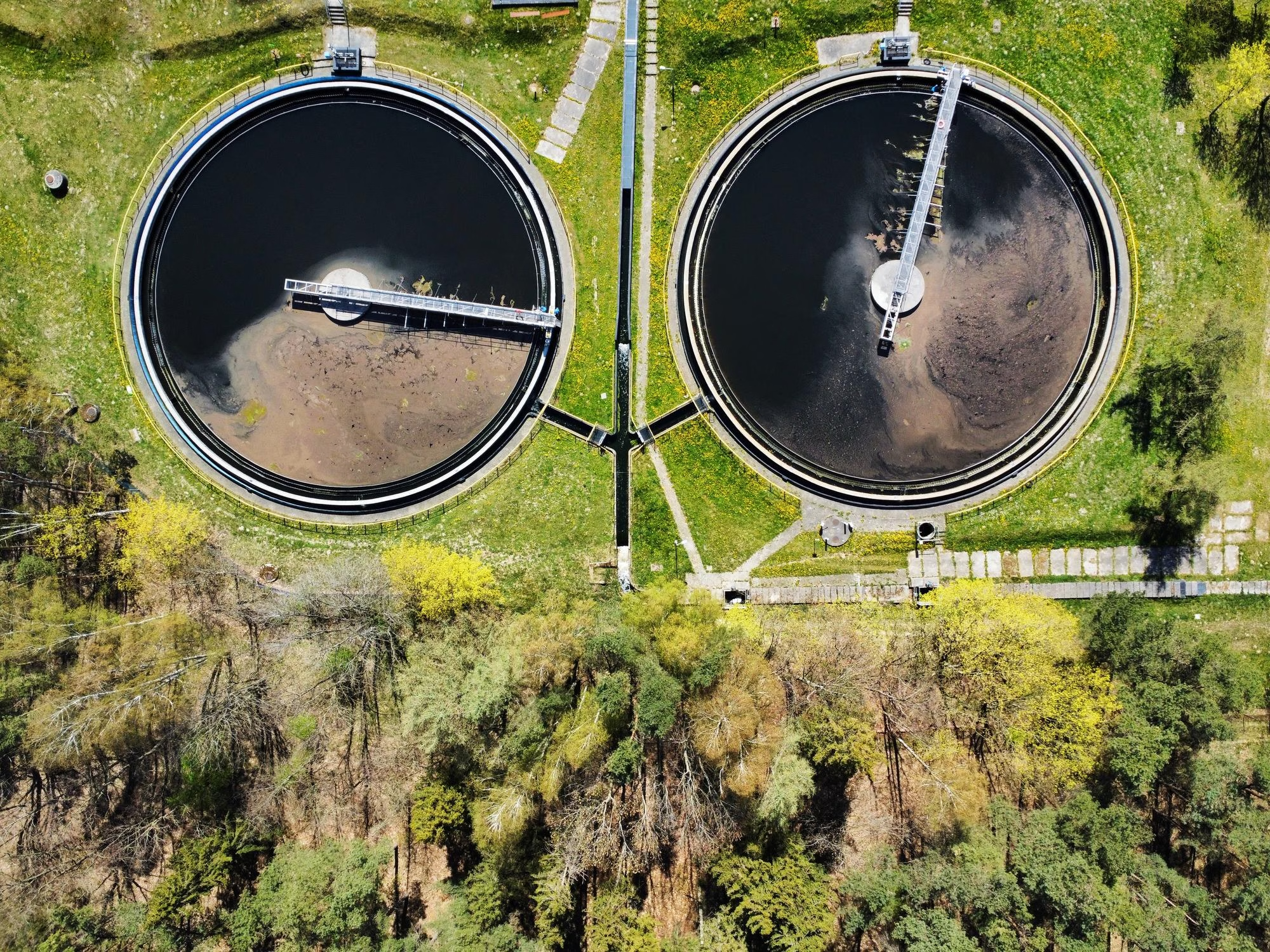
Every summer, reservoir levels become one of the most closely monitored indicators of India's water security. News reports frequently highlight reservoirs reaching low storage levels, prompting concerns about drinking water availability, irrigation, and industrial supply.
When reservoirs fall below their critical capacity, the effects extend far beyond reduced water storage. Communities, farmers, industries, and local governments all experience the consequences of limited water availability.
Through its expertise in water infrastructure and EPC solutions, OmYash Projects contributes to the development of sustainable infrastructure that improves water storage, transmission, and long-term resource management.
What Is Critical Reservoir Capacity?
Critical capacity refers to the minimum storage level required for a reservoir to continue supplying water safely and efficiently.
Once water levels fall below this threshold, reservoir operators may need to restrict releases to preserve essential supplies.
Critical capacity varies depending on:
- Reservoir size
- Regional water demand
- Rainfall forecasts
- Drinking water requirements
- Irrigation schedules
- Industrial consumption
Monitoring these levels helps authorities make informed water management decisions.
Why Do Reservoir Levels Drop?
Several factors contribute to declining reservoir storage.
Delayed or Weak Monsoons
Insufficient rainfall reduces reservoir inflows, leaving less water available for the dry season.
Extreme Heat
High temperatures increase evaporation, causing reservoirs to lose significant amounts of stored water.
Rising Population
Growing cities require larger volumes of drinking water throughout the year.
Agricultural Demand
During summer months, irrigation requirements increase substantially.
Industrial Expansion
Manufacturing and infrastructure development also contribute to higher water demand.
Together, these factors place increasing pressure on India's water resources.
Impact on Drinking Water Supply
The first priority during water shortages is ensuring safe drinking water.
When reservoir levels become critically low, authorities may introduce:
- Water rationing
- Reduced supply hours
- Emergency water tankers
- Alternate water sourcing
- Conservation campaigns
Efficient planning helps minimize disruptions for households and businesses.
Impact on Agriculture
Agriculture is among the largest consumers of water in India.
Low reservoir storage can result in:
- Reduced irrigation releases
- Lower crop yields
- Delayed sowing
- Increased dependence on groundwater
- Higher farming costs
Modern irrigation infrastructure helps improve water-use efficiency during drought conditions.
Several major infrastructure projects executed by OmYash Projects demonstrate the importance of integrated water management systems for supporting agricultural development.
Industrial Challenges
Industries depend on reliable water supplies for production processes, cooling systems, and manufacturing operations.
Low reservoir levels may lead to:
- Production disruptions
- Increased operating costs
- Water conservation measures
- Greater reliance on recycled water
Reliable infrastructure helps industries maintain operational continuity during periods of water stress.
Increased Pressure on Groundwater
When surface water becomes scarce, many communities turn to groundwater.
However, excessive groundwater extraction may lead to:
- Falling water tables
- Higher pumping costs
- Reduced aquifer recharge
- Long-term sustainability concerns
Balanced management of surface and groundwater resources is essential.
How Modern Infrastructure Reduces Water Risks
Water shortages can be managed more effectively through strong infrastructure investments.
Key solutions include:
Reservoir Development
Expanding storage capacity improves long-term water availability.
Water Transmission Pipelines
Efficient pipeline systems reduce water losses and improve distribution.
Through its comprehensive infrastructure services, OmYash Projects supports the development of transmission systems that deliver water efficiently across cities, industries, and rural communities.
Lift Irrigation Projects
Lift irrigation systems improve water accessibility in regions where gravity-based supply is not possible.
Smart Monitoring Systems
Digital technologies help monitor reservoir levels, predict demand, and optimize water releases.
As an experienced EPC infrastructure company, OmYash Projects recognizes the importance of combining engineering expertise with modern monitoring technologies.
Preparing for Future Water Challenges
Climate change is making reservoir management increasingly complex.
Future-ready water infrastructure should focus on:
- Larger storage capacity
- Smart reservoir management
- Water conservation
- Efficient transmission systems
- Sustainable irrigation
- Digital monitoring technologies
These investments strengthen long-term water security and improve resilience during droughts.
Explore the complete range of services offered by OmYash Projects to learn how modern infrastructure supports sustainable water management.
Conclusion
Reservoir levels play a critical role in ensuring reliable water supply throughout the year. When storage falls below critical capacity, the effects are felt across households, agriculture, industries, and local economies.
Investing in resilient water infrastructure, efficient transmission systems, smart monitoring technologies, and sustainable water management practices will help India address future water challenges more effectively.
For expert guidance on water infrastructure development and EPC solutions, contact OmYash Projects to discuss your project requirements.
FAQs
What is critical reservoir capacity?
Critical reservoir capacity is the minimum water storage level required for a reservoir to continue supplying water safely and efficiently.
Why do reservoir levels fall during summer?
High temperatures, increased evaporation, agricultural demand, industrial use, and limited rainfall all contribute to lower reservoir levels.
How do low reservoir levels affect drinking water?
Authorities may implement water rationing, reduced supply schedules, or alternative water distribution methods to manage shortages.
Can infrastructure reduce water shortages?
Yes. Reservoirs, dams, transmission pipelines, lift irrigation systems, and smart monitoring technologies all improve water security and resource management.
Why is reservoir monitoring important?
Real-time monitoring helps authorities optimize water releases, forecast shortages, and improve long-term planning for sustainable water supply.