
What Mumbai's Monsoon Flooding Teaches Us About Urban Infrastructure
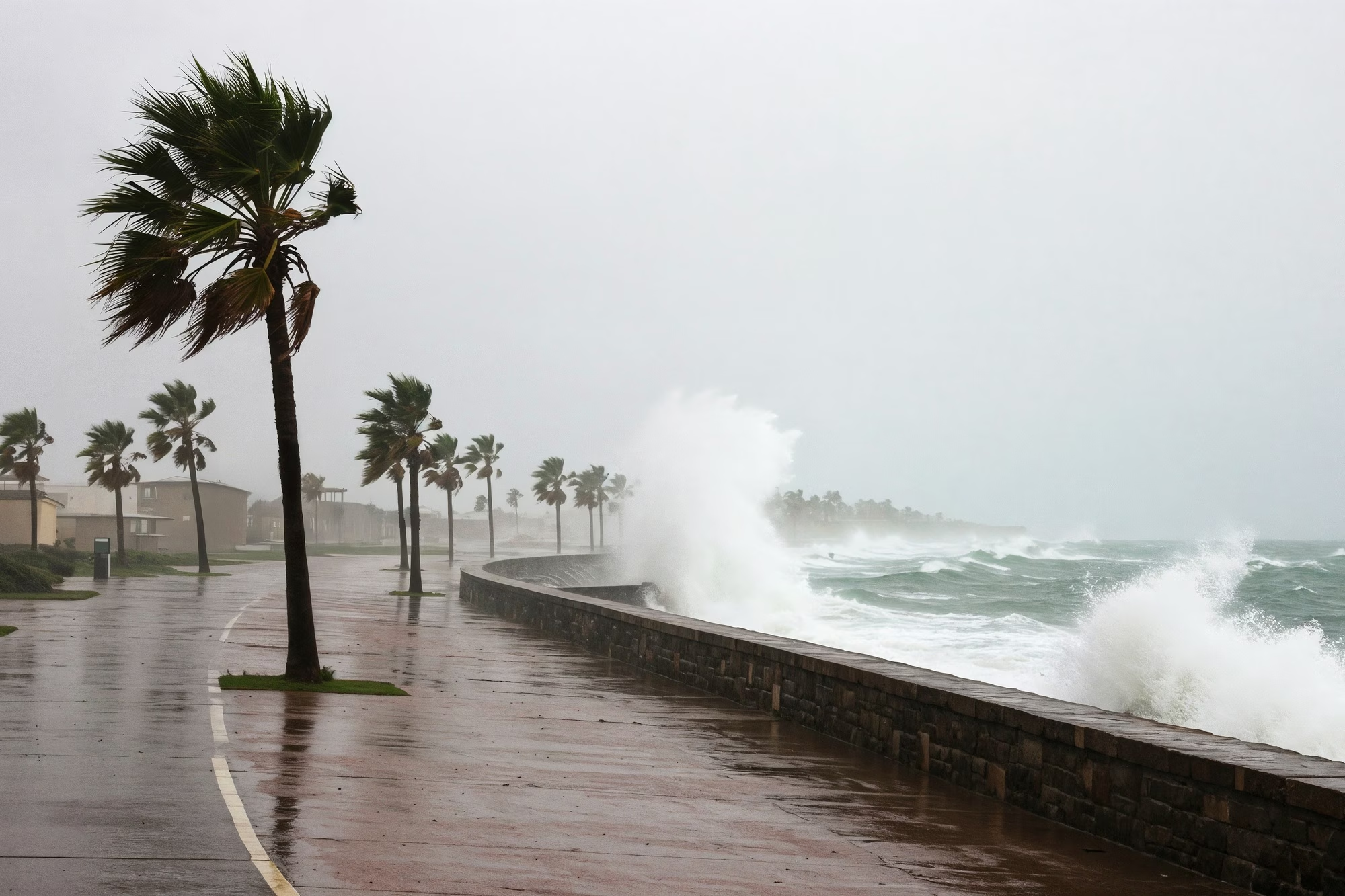
Every monsoon, Mumbai finds itself at the center of national attention as heavy rainfall disrupts daily life, inundates roads, affects railway services, and causes waterlogging across several parts of the city. In recent monsoon spells, the India Meteorological Department (IMD) has issued multiple heavy rainfall alerts for Mumbai and surrounding districts, while the Brihanmumbai Municipal Corporation (BMC) has activated flood response measures, pumping stations, and emergency teams to manage rising water levels.
According to the India Meteorological Department, extreme rainfall events are becoming more frequent in many parts of India due to changing climatic conditions. These weather events are testing the resilience of urban infrastructure like never before. (Source: India Meteorological Department – https://mausam.imd.gov.in)
Mumbai's experience is not unique. Cities such as Bengaluru, Chennai, Hyderabad, Delhi, and Ahmedabad have also witnessed recurring urban flooding, making it clear that India must rethink how cities are planned, constructed, and managed.
As experts in water infrastructure and EPC solutions, OmYash Projects understands that resilient infrastructure is the foundation of sustainable urban development.
Why Does Mumbai Flood Every Monsoon?
Mumbai receives some of the highest seasonal rainfall among India's metropolitan cities.
Several factors contribute to recurring flooding:
- Extremely intense rainfall over short durations
- High tides slowing stormwater discharge
- Rapid urbanization
- Encroachment of natural drainage channels
- Ageing drainage infrastructure
- Increased concretization reducing groundwater recharge
While heavy rainfall cannot be prevented, its impact can be significantly reduced through better engineering and infrastructure planning.
Heavy Rainfall Is Testing India's Urban Infrastructure
Recent rainfall events have once again highlighted the importance of investing in resilient infrastructure.
During periods of intense rainfall, cities often experience:
- Road flooding
- Traffic disruptions
- Railway delays
- Basement flooding
- Overflowing drainage systems
- Damage to public utilities
These events demonstrate why cities must move beyond reactive flood management and adopt long-term infrastructure planning.
Stormwater Drainage Is the First Line of Defence
One of the most critical components of urban infrastructure is the stormwater drainage network.
Efficient drainage systems help:
- Quickly remove rainwater
- Prevent waterlogging
- Protect roads and buildings
- Reduce traffic disruptions
- Improve public safety
Regular maintenance, desilting, and expansion of drainage capacity are essential before every monsoon season.
Pumping Stations Play a Critical Role
Many low-lying urban areas cannot rely solely on gravity to remove excess water.
Modern pumping stations help:
- Move stormwater efficiently
- Prevent prolonged flooding
- Protect underground infrastructure
- Support emergency flood response
Smart pumping systems equipped with sensors and automated controls further improve operational efficiency during heavy rainfall.
Reservoirs and Dams Support Flood Management
Flood management extends beyond city limits.
Reservoirs and dams upstream help regulate river flows and reduce downstream flood risks when managed effectively.
Through careful reservoir operations, authorities can:
- Monitor inflows
- Coordinate controlled releases
- Reduce sudden surges
- Improve water storage
Several major infrastructure projects executed by OmYash Projects demonstrate the importance of integrated water infrastructure in supporting flood resilience.
Technology Is Transforming Urban Flood Management
Modern cities increasingly rely on digital technologies to improve preparedness.
Key innovations include:
IoT Water Level Sensors
Continuously monitor drains, rivers, and reservoirs.
SCADA Systems
Enable centralized monitoring of pumping stations and water infrastructure.
GIS Mapping
Helps identify flood-prone zones and improve infrastructure planning.
AI-Based Rainfall Forecasting
Supports faster operational decisions during extreme weather.
As an experienced EPC infrastructure company, OmYash Projects recognizes the growing role of smart technologies in building future-ready infrastructure.
Climate Change Demands Better Infrastructure
According to the Intergovernmental Panel on Climate Change (IPCC), many regions are expected to experience more frequent extreme rainfall events as global temperatures continue to rise. (Source: https://www.ipcc.ch)
This means future infrastructure must be designed not only for today's rainfall but also for tomorrow's climate challenges.
Cities need investments in:
- Smart drainage systems
- Larger stormwater networks
- Flood retention infrastructure
- Water transmission systems
- Climate-resilient engineering
- Sustainable urban planning
Building More Resilient Indian Cities
India's urban population continues to grow rapidly, increasing pressure on existing infrastructure.
Building resilient cities requires:
- Integrated stormwater management
- Modern pumping infrastructure
- Smart monitoring systems
- Sustainable drainage design
- Preventive maintenance
- Climate-adaptive engineering
Through comprehensive infrastructure services, OmYash Projects contributes to engineering solutions that improve water management and strengthen urban resilience.
Conclusion
Mumbai's recurring monsoon flooding is more than a seasonal challenge—it is a reminder of the importance of investing in resilient urban infrastructure. As rainfall patterns become increasingly unpredictable, cities across India must modernize drainage systems, strengthen flood management infrastructure, and adopt smart technologies that improve preparedness and response.
By combining engineering expertise, sustainable design, and advanced monitoring systems, India can build cities that are better equipped to withstand future climate challenges.
For expert support in water infrastructure, EPC engineering, and sustainable development projects, contact OmYash Projects to discuss your infrastructure requirements.
FAQs
Why does Mumbai experience flooding every monsoon?
Mumbai receives intense seasonal rainfall, and factors such as rapid urbanization, ageing drainage systems, high tides, and reduced natural drainage contribute to recurring flooding.
How can cities reduce urban flooding?
Cities can reduce flooding by improving stormwater drainage, upgrading pumping stations, maintaining drainage channels, adopting smart monitoring systems, and implementing climate-resilient infrastructure.
What role do reservoirs play in flood management?
Reservoirs help regulate river flows, store excess rainfall, and support controlled water releases that reduce downstream flood risks.
How does technology improve flood management?
Technologies such as SCADA systems, IoT sensors, GIS mapping, and AI-based weather forecasting enable real-time monitoring and faster emergency response.
Why is resilient infrastructure important?
Resilient infrastructure helps cities withstand extreme weather events, reduces damage to public assets, improves public safety, and supports sustainable urban development.