
What the IMD's Monsoon Forecast Means for India's Water Infrastructure
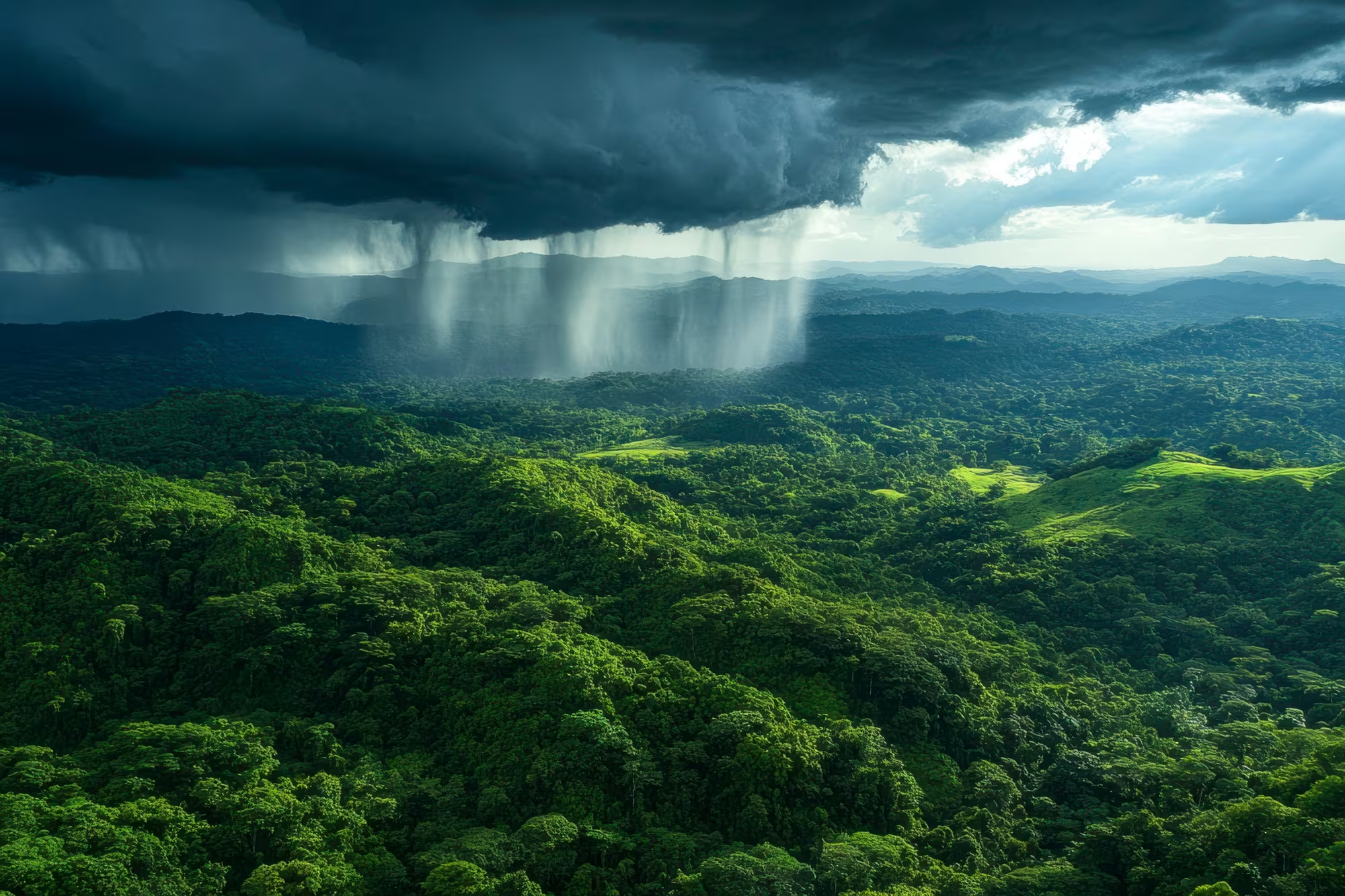
Every year, millions of Indians eagerly await the India Meteorological Department (IMD) monsoon forecast. While farmers often receive the most attention during these announcements, the forecast is equally critical for engineers, dam authorities, EPC companies, urban planners, and policymakers responsible for managing the country's water infrastructure.
The southwest monsoon contributes nearly 75–80% of India's annual rainfall, making it the backbone of the nation's water resources. The forecast issued by the IMD influences how reservoirs are operated, how irrigation systems are managed, how cities prepare for flooding, and how governments plan water distribution for the coming months.
According to the India Meteorological Department (IMD), seasonal forecasts are developed using advanced weather models, ocean-atmosphere observations, and climate analysis to help governments and infrastructure agencies prepare for varying rainfall patterns. (Source: India Meteorological Department – https://mausam.imd.gov.in)
With expertise in water infrastructure and EPC solutions, OmYash Projects supports the development of resilient infrastructure that helps India efficiently store, distribute, and manage water during both abundant and deficient monsoon seasons.
Why the IMD Monsoon Forecast Is So Important
The IMD's seasonal monsoon forecast is much more than a weather update. It provides valuable insights that influence planning across multiple sectors.
The forecast helps authorities:
- Prepare reservoirs for incoming rainfall
- Plan irrigation schedules
- Reduce flood risks
- Manage drinking water supplies
- Optimize hydropower generation
- Improve disaster preparedness
By understanding expected rainfall patterns, infrastructure operators can make informed decisions before the monsoon begins.
How the Forecast Influences Reservoir Management
Reservoir operators closely monitor IMD rainfall predictions to determine how much storage capacity should be available before heavy rainfall arrives.
If above-normal rainfall is expected, reservoir authorities may:
- Gradually release stored water
- Increase spillway readiness
- Monitor inflows more frequently
- Coordinate with downstream districts
If below-normal rainfall is forecast, greater emphasis is placed on conserving available storage to ensure drinking water and irrigation needs can be met throughout the year.
The Central Water Commission (CWC) uses reservoir storage data to support water resource planning across the country. (Source: https://cwc.gov.in)
Several major infrastructure projects executed by OmYash Projects demonstrate how well-planned water infrastructure contributes to efficient reservoir management.
Supporting Irrigation Planning
Agriculture remains India's largest consumer of freshwater.
The IMD's forecast helps irrigation departments determine:
- Water release schedules
- Crop planning
- Canal operations
- Reservoir allocations
- Groundwater conservation strategies
Accurate rainfall predictions enable farmers and irrigation authorities to optimize water use while reducing the impact of drought conditions.
Preparing Cities for Heavy Rainfall
Urban flooding has become a recurring challenge in many Indian cities.
When the IMD forecasts above-normal rainfall, municipal authorities begin preparing by:
- Cleaning stormwater drains
- Inspecting pumping stations
- Monitoring reservoirs
- Strengthening flood response plans
- Coordinating emergency services
These preparations reduce the risk of waterlogging and infrastructure damage during intense rainfall events.
Through its comprehensive infrastructure services, OmYash Projects contributes to engineering solutions that improve water transmission, drainage, and urban resilience.
Improving Dam Safety
Heavy rainfall increases pressure on dams and reservoirs.
Forecast-based planning enables dam operators to:
- Inspect spillway gates
- Test monitoring equipment
- Review emergency action plans
- Conduct structural inspections
- Schedule controlled water releases
The Dam Rehabilitation and Improvement Project (DRIP), supported by the Government of India and the World Bank, continues to strengthen dam safety through modernization and monitoring initiatives. (Source: https://damrehabilitation.in)
Hydropower Depends on Accurate Rainfall Forecasts
Hydropower generation is directly linked to reservoir inflows.
Accurate monsoon forecasts help operators:
- Estimate energy production
- Balance reservoir storage
- Manage electricity demand
- Coordinate water releases
This improves both renewable energy generation and long-term water availability.
Technology Is Making Forecast-Based Planning Smarter
Modern infrastructure increasingly combines IMD forecasts with digital technologies.
These include:
SCADA Systems
Provide real-time monitoring of reservoirs, pumping stations, and water distribution networks.
IoT Sensors
Monitor rainfall, reservoir levels, and river flows continuously.
Geographic Information Systems (GIS)
Help identify flood-prone areas and optimize water resource planning.
Artificial Intelligence (AI)
Uses weather forecasts and historical data to predict reservoir inflows and improve operational decisions.
As an experienced EPC infrastructure company, OmYash Projects recognizes the growing importance of integrating weather intelligence with engineering solutions.
Climate Change Makes Forecasts More Important Than Ever
Climate change is increasing the frequency of:
- Heatwaves
- Cloudbursts
- Flash floods
- Delayed monsoons
- Extended dry spells
This makes accurate seasonal forecasting even more valuable for water infrastructure planning.
Future-ready infrastructure must combine:
- Reservoir modernization
- Smart monitoring
- Automated control systems
- Climate-resilient engineering
- Sustainable water management
These investments strengthen India's ability to manage increasingly unpredictable weather conditions.
Explore the complete range of services offered by OmYash Projects to learn how modern engineering supports resilient water infrastructure.
Conclusion
The IMD's monsoon forecast is one of the most important planning tools for India's water infrastructure sector. By providing early insights into expected rainfall patterns, it enables governments, reservoir operators, irrigation departments, and EPC companies to make informed decisions that improve water security and reduce disaster risks.
As climate variability continues to reshape rainfall patterns, combining accurate weather forecasting with advanced engineering, smart monitoring systems, and resilient infrastructure will be essential for sustainable development.
For expert guidance on water infrastructure development and EPC engineering solutions, contact OmYash Projects to discuss your project requirements.
FAQs
What is the IMD monsoon forecast?
The IMD monsoon forecast is a seasonal weather prediction issued by the India Meteorological Department that estimates rainfall across different regions of the country.
Why is the IMD forecast important for water infrastructure?
It helps reservoir operators, irrigation departments, municipalities, and infrastructure agencies plan water storage, flood control, and resource allocation before the monsoon.
How does the forecast affect dam operations?
Forecasts help dam authorities decide when to store water, when to release it safely, and how to prepare spillways and monitoring systems for heavy rainfall.
Which government agencies use IMD forecasts?
Organizations such as the Central Water Commission (CWC), Ministry of Jal Shakti, state irrigation departments, hydropower utilities, and disaster management authorities rely on IMD forecasts for planning.
How can technology improve forecast-based water management?
Technologies like SCADA, IoT sensors, GIS, AI, and automated monitoring systems help infrastructure operators combine weather forecasts with real-time data for better decision-making.