
Water & Wastewater Treatment EPC Services in Gujarat: From Design to Commissioning
Gujarat's rapid industrialisation, urban growth and expanding manufacturing ecosystem are increasing the need for reliable water and wastewater infrastructure.Industries cannot depend only on freshwater availability. They need systems capable of treating incoming water, managing process wastewater, meeting discharge requirements and, wherever practical, recovering water for reuse.For this reason, water and wastewater treatment projects are increasingly being approached as integrated infrastructure projects rather than as isolated equipment installations.An effective treatment plant requires engineering, process selection, civil construction, mechanical equipment, electrical systems, instrumentation, automation, testing and commissioning to work together.This is where an experienced EPC partner becomes important.OmYash Projects provides EPC and infrastructure solutions covering water treatment, wastewater treatment, effluent treatment and associated infrastructure. Its capabilities extend from project engineering and construction through testing, commissioning and infrastructure support.For organisations planning a new treatment facility, upgrading an existing system or developing industrial water infrastructure, understanding the EPC approach is essential.
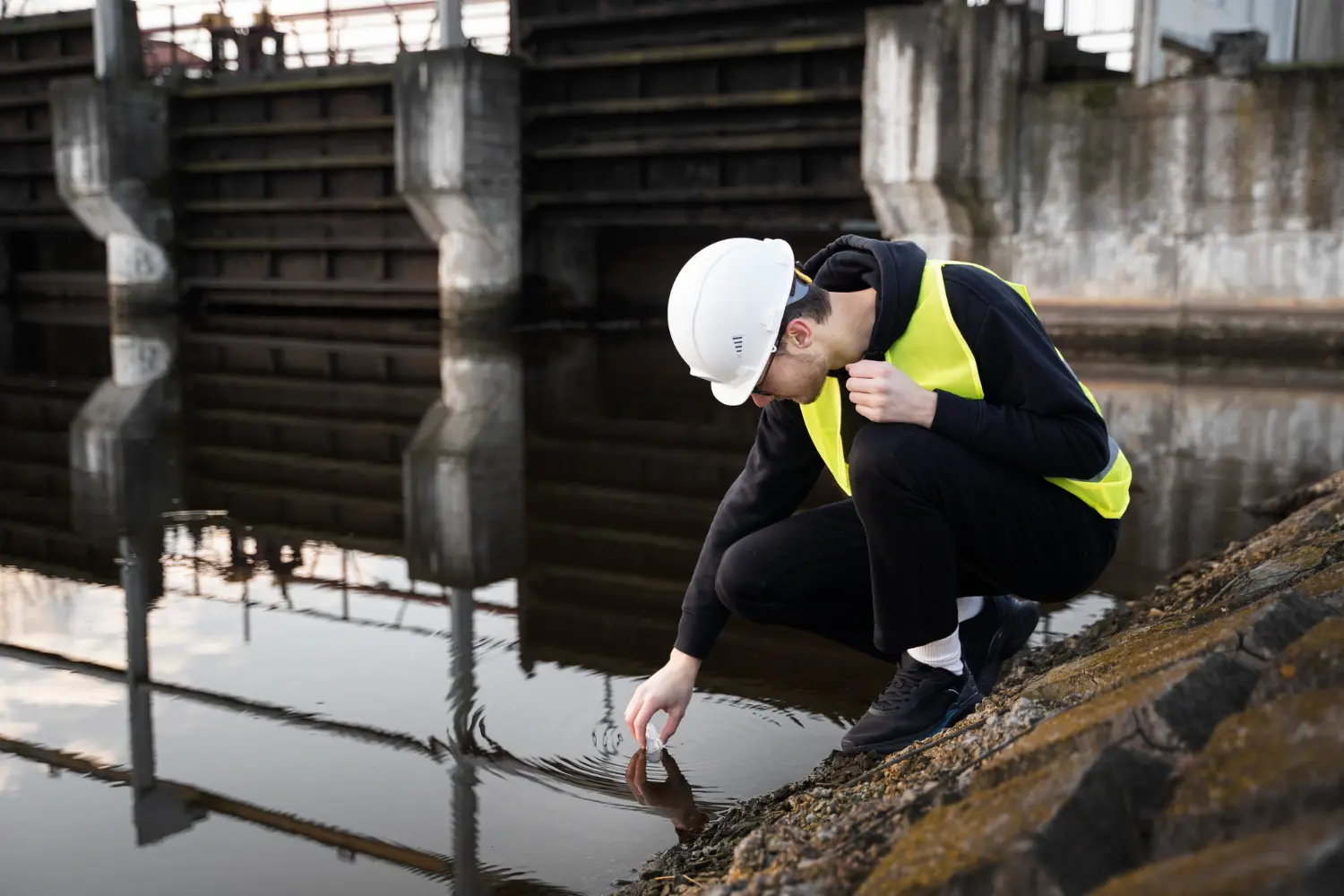
What Is Water and Wastewater Treatment EPC?
Water and wastewater treatment EPC refers to an integrated project-delivery approach in which the engineering, procurement and construction requirements of a treatment facility are coordinated under a defined project scope.
Instead of treating engineering, equipment procurement and construction as completely separate activities, an EPC model connects them into one execution framework.
A typical treatment EPC project can involve:
- Process and hydraulic engineering
- Plant layout and design
- Civil and structural works
- Mechanical equipment
- Pumps and piping
- Electrical systems
- Instrumentation
- Automation and SCADA
- Installation
- Testing
- Commissioning
- Performance verification
- Operation and maintenance support
The exact scope depends on the type of treatment plant, capacity, raw-water characteristics, wastewater characteristics, site conditions and required output quality.
OmYash's EPC infrastructure services cover water and wastewater treatment alongside its broader infrastructure capabilities.
Why Gujarat Needs Advanced Water and Wastewater Infrastructure
Gujarat has a diverse industrial base that includes chemicals, pharmaceuticals, engineering, textiles, petrochemicals, manufacturing and other water-intensive activities.
Industrial expansion creates two related infrastructure requirements.
The first is access to treated water suitable for the intended application.
The second is responsible management of wastewater generated during industrial and municipal processes.
A treatment system therefore has to be designed around the actual characteristics of the water or wastewater rather than around a standard equipment package.
This makes project engineering particularly important.
A treatment plant designed without adequately understanding the incoming water quality, contaminants, flow variations and intended end use can face operational problems later.
For Gujarat's industrial ecosystem, treatment infrastructure needs to be reliable, maintainable and capable of operating under changing loads.
Water Treatment Plant EPC Services
A water treatment plant is designed to convert a specific raw-water source into water suitable for its intended application.
The required treatment process depends on the characteristics of the source water and the quality required at the outlet.
Depending on the project, treatment can involve processes such as:
- Screening
- Coagulation
- Flocculation
- Sedimentation
- Filtration
- Disinfection
- Chemical treatment
- Softening
- Other specialised treatment processes
The final configuration needs to be determined through engineering and water-quality analysis.
OmYash's experience in this area is also reflected in its technical coverage of water treatment plant manufacturers and infrastructure in Ahmedabad.
For an EPC project, the objective is not simply to install treatment equipment.
The complete plant must function as an integrated system.
Industrial Water Treatment Infrastructure
Industrial water requirements can differ significantly from municipal water requirements.
A manufacturing facility may require water for:
- Process operations
- Boilers
- Cooling systems
- Cleaning
- Production
- Utilities
- Worker facilities
- Other industrial applications
The quality requirements can therefore vary considerably.
An industrial water-treatment plant may need to address parameters such as:
- Suspended solids
- Hardness
- Turbidity
- Dissolved contaminants
- Organic matter
- Microbiological contamination
- Specific process-related contaminants
The treatment process should therefore be developed around the intended application.
For Gujarat's industrial clusters, this site- and process-specific approach is particularly relevant.
OmYash's industrial water treatment plant expertise provides a technical foundation for organisations evaluating industrial water infrastructure.
Wastewater Treatment as an Industrial Infrastructure Requirement
Wastewater treatment addresses water after it has been used in a process, facility or community.
The characteristics of wastewater can vary dramatically depending on its source.
Municipal sewage is different from pharmaceutical wastewater.
Textile wastewater is different from chemical-industry wastewater.
Food-processing wastewater is different from industrial cooling-water discharge.
This means wastewater treatment cannot be approached as a one-size-fits-all installation.
The plant needs to be designed around:
- Flow rate
- Wastewater characteristics
- Pollutant load
- Treatment objectives
- Discharge requirements
- Reuse requirements
- Site constraints
The engineering approach must therefore begin with understanding the wastewater itself.
STP, ETP and WTP: Understanding the Difference
One of the most common sources of confusion in treatment infrastructure is the difference between WTP, STP and ETP.
A Water Treatment Plant (WTP) generally treats raw water to make it suitable for a particular use.
A Sewage Treatment Plant (STP) treats sewage generated from residential, commercial or institutional sources.
An Effluent Treatment Plant (ETP) is generally designed to treat industrial effluent generated by manufacturing or industrial processes.
The treatment objective, process configuration and equipment selection can differ substantially between these systems.
OmYash has also covered this distinction in its detailed resource on STP vs ETP vs WTP.
Understanding the difference is important before beginning an EPC project because selecting the wrong treatment approach can affect both capital expenditure and long-term operating performance.
Effluent Treatment Plant EPC Services
Industrial effluent can contain pollutants that require specialised treatment before discharge or reuse.
An ETP is therefore designed around the specific industrial process generating the wastewater.
Depending on the industry and wastewater characteristics, treatment may involve combinations of:
- Physical treatment
- Chemical treatment
- Biological treatment
- Filtration
- Sludge management
- Advanced treatment
- Water recovery
The plant configuration must be developed after evaluating the wastewater characteristics and required treatment outcome.
OmYash provides effluent treatment project capabilities as part of its broader water and wastewater infrastructure services.
The company's technical content also explains the benefits of effluent treatment projects in India, particularly in the context of industrial wastewater management.
Engineering Comes Before Equipment Procurement
One of the most important aspects of treatment EPC is that equipment selection should follow engineering rather than replace it.
Before procurement begins, the project team needs to understand:
- Required capacity
- Hydraulic flow
- Raw-water or wastewater characteristics
- Treatment objectives
- Site conditions
- Available footprint
- Utility requirements
- Electrical load
- Sludge requirements
- Automation requirements
- Future expansion requirements
These factors influence equipment specifications and plant configuration.
For example, pump selection depends on flow and head requirements.
Tank sizing depends on hydraulic retention and process requirements.
Aeration systems depend on biological treatment requirements.
Filtration equipment depends on water characteristics and required output.
Therefore, engineering forms the foundation of an effective EPC project.
Civil Infrastructure in Treatment Plants
Treatment plants are not only collections of mechanical equipment.
They are physical infrastructure systems requiring substantial civil and structural work.
Depending on the project, civil works can include:
- Treatment tanks
- Equalisation tanks
- Clarifiers
- Filter structures
- Pumping stations
- Chemical rooms
- Equipment foundations
- Pipe supports
- Control rooms
- Electrical rooms
- Access structures
- Drainage systems
The civil design must account for equipment loads, hydraulic levels, maintenance access and long-term operating requirements.
Coordination between civil and mechanical engineering is particularly important.
Equipment foundations, pipe routes, tank penetrations and access arrangements need to be resolved before construction reaches the installation stage.
Mechanical Systems and Piping
Mechanical systems are central to treatment-plant operation.
They can include:
- Pumps
- Agitators
- Mixers
- Blowers
- Filters
- Clarifiers
- Chemical dosing systems
- Valves
- Piping
- Sludge-handling equipment
Piping connects these systems into a functioning treatment process.
Incorrect pipe sizing, routing or valve configuration can create hydraulic and maintenance problems.
The same principle applies to pumping systems.
Pump selection must be based on actual operating conditions rather than simply choosing equipment based on nominal flow.
This is why integrated EPC execution can reduce coordination gaps between engineering, procurement and site installation.
Electrical and Instrumentation Systems
Modern treatment plants rely heavily on electrical and instrumentation systems.
Electrical infrastructure may include:
- Power distribution
- Motor control centres
- Control panels
- Motor starters
- Cabling
- Backup systems
- Electrical protection
Instrumentation can include sensors for:
- Flow
- Pressure
- Level
- pH
- Turbidity
- Dissolved oxygen
- Other process parameters
These systems provide the information required to operate and monitor the plant.
Without appropriate instrumentation, operators may have limited visibility into actual process performance.
SCADA and Automation in Treatment Infrastructure
SCADA and automation can provide centralised monitoring and control of treatment infrastructure.
A SCADA system can allow operators to monitor parameters such as:
- Pump status
- Tank levels
- Flow
- Pressure
- Equipment alarms
- Process conditions
- Electrical parameters
Automation can also support controlled operation of pumps, valves, dosing systems and other equipment.
OmYash's project portfolio includes water infrastructure work involving SCADA and electromechanical systems, demonstrating the integration of automation into larger infrastructure projects.
This is particularly relevant for plants where continuous monitoring and coordinated equipment operation are required.
Testing and Commissioning
A treatment plant is not complete when construction ends.
Testing and commissioning are critical to verify that the installed systems operate as intended.
Commissioning can involve:
- Equipment inspection
- Mechanical testing
- Electrical testing
- Instrument calibration
- Pump testing
- Pipeline testing
- Control-system verification
- Dry runs
- Wet commissioning
- Process verification
Each subsystem needs to be checked before the entire plant is operated as an integrated system.
This is particularly important for EPC projects because the contractor is responsible for coordinating multiple systems that must ultimately work together.
The importance of testing is also evident in OmYash's pipeline infrastructure work, where pipeline testing before commissioning forms an important part of project execution.
Water Reuse and Resource Recovery
Treatment infrastructure is increasingly being considered from a water-reuse perspective.
Instead of viewing wastewater only as waste that needs to be disposed of, organisations can evaluate opportunities to recover treated water for suitable applications.
Depending on the water quality and treatment configuration, treated water may potentially be considered for applications such as:
- Landscaping
- Cooling
- Utility operations
- Process applications
- Flushing
- Other non-potable uses
The feasibility of reuse depends on the quality requirements and treatment process.
Water reuse can therefore become part of a broader industrial water-management strategy.
For water-stressed industrial regions, this approach can reduce dependence on freshwater sources when technically and economically appropriate.
Designing Treatment Plants for Long-Term Operation
A treatment plant needs to work not just on its commissioning day but throughout its operating life.
This means long-term operation should influence design decisions.
Important considerations include:
- Equipment accessibility
- Maintenance space
- Spare-parts availability
- Pump efficiency
- Instrument reliability
- Chemical storage
- Sludge management
- Cleaning requirements
- Operator access
- Future capacity requirements
A plant that is difficult to maintain can become expensive to operate even if the initial construction was successful.
This is one reason EPC projects need to consider lifecycle performance rather than only construction completion.
Why Integrated EPC Delivery Matters
Water and wastewater treatment projects involve multiple engineering disciplines.
If engineering is performed by one team, procurement by another and construction by a completely disconnected contractor, coordination issues can arise.
An integrated EPC approach creates greater alignment between:
Engineering → Procurement → Construction → Testing → Commissioning
The same project requirements can be carried through each stage.
This can improve coordination between:
- Design drawings
- Equipment specifications
- Civil construction
- Mechanical installation
- Electrical works
- Instrumentation
- Automation
- Commissioning
For complex treatment infrastructure, this integration is an important consideration when evaluating EPC contractors.
Choosing a Water and Wastewater EPC Company in Gujarat
The right EPC partner should be evaluated against the actual requirements of the project.
A company may have experience in water treatment but limited experience with industrial wastewater.
Another contractor may specialise in equipment supply without undertaking complete EPC execution.
Project owners should therefore examine relevant experience in:
- Similar treatment capacity
- Similar wastewater characteristics
- Civil infrastructure
- Mechanical systems
- Electrical works
- Automation
- Testing
- Commissioning
- Operation and maintenance
The contractor's project portfolio can provide valuable evidence of execution capability.
OmYash's project portfolio includes water-treatment infrastructure alongside large water, irrigation, pipeline and industrial projects.
OmYash Projects for Water and Wastewater Infrastructure
OmYash Projects approaches water and wastewater infrastructure as part of its broader EPC capabilities.
Its service portfolio includes water infrastructure, water and wastewater treatment, effluent treatment and associated engineering and construction activities.
This allows treatment projects to be considered alongside related infrastructure such as pipelines, pumping systems and industrial facilities.
For Gujarat-based industries, this broader infrastructure perspective can be useful when a treatment plant forms only one part of a larger project.
For example, an industrial development may require:
- Raw-water infrastructure
- Water treatment
- Process-water distribution
- Wastewater collection
- Effluent treatment
- Treated-water reuse
- Sludge handling
- Utility systems
An EPC partner capable of coordinating connected infrastructure can simplify project execution.
The Future of Water and Wastewater Infrastructure in Gujarat
Gujarat's continued industrial development will increase the importance of efficient water management.
Future treatment infrastructure is likely to focus increasingly on:
- Higher treatment efficiency
- Water reuse
- Automation
- Real-time monitoring
- Lower operating costs
- Resource recovery
- Improved process control
- Long-term asset performance
For industries, this means treatment infrastructure should be considered as a strategic utility rather than simply a compliance requirement.
A well-designed plant can support operational continuity, responsible water use and long-term infrastructure resilience.
Conclusion
Water and wastewater treatment projects require much more than installing treatment equipment.
They require an integrated approach covering engineering, civil construction, mechanical systems, electrical infrastructure, instrumentation, automation, testing and commissioning.
For Gujarat's growing industrial and urban infrastructure requirements, the ability to execute these systems as coordinated EPC projects is increasingly important.
OmYash Projects brings water treatment, wastewater treatment, effluent treatment, pumping, pipeline and broader infrastructure capabilities together within its EPC offering.
Its experience across water infrastructure and treatment projects provides a practical foundation for organisations planning new treatment plants or upgrading existing infrastructure.
From engineering and procurement through construction, testing and commissioning, the objective should remain the same: build treatment infrastructure that performs reliably throughout its operating life.
Organisations planning water treatment, wastewater or effluent infrastructure can explore OmYash's EPC services, review its completed and ongoing projects, or contact the company through its official contact page.
Frequently Asked Questions
What is water and wastewater treatment EPC?
Water and wastewater treatment EPC is an integrated project-delivery model covering engineering, procurement and construction of treatment infrastructure. Depending on the project, it can also include installation, testing, commissioning and operation and maintenance.
Does OmYash provide water treatment EPC services in Gujarat?
Yes. Water and wastewater treatment are included within OmYash Projects' infrastructure and EPC service capabilities, alongside water infrastructure, effluent treatment, pipelines and pumping systems.
What is the difference between WTP, STP and ETP?
A WTP treats raw water for a required application, an STP treats sewage, and an ETP treats industrial effluent. The treatment process and plant configuration depend on the characteristics of the incoming water or wastewater and the required outlet quality.
What does an industrial wastewater treatment plant include?
An industrial wastewater treatment plant can include physical, chemical and biological treatment systems, depending on the wastewater characteristics. Supporting infrastructure can include tanks, pumps, piping, chemical dosing, filtration, sludge handling, electrical systems, instrumentation and automation.
Why is EPC important for water treatment projects?
EPC integrates engineering, procurement and construction so that the treatment process, equipment, civil infrastructure, mechanical systems, electrical works and commissioning can be coordinated under one project framework.
Does a water treatment EPC project include SCADA?
SCADA can be included where the project requires automated monitoring and control. Its scope depends on the plant's process requirements, equipment and desired level of automation.
How do I select a water and wastewater treatment EPC company?
Project owners should evaluate an EPC contractor based on relevant treatment experience, project scale, engineering capabilities, equipment integration, civil and mechanical execution, testing, commissioning and long-term operational requirements. Reviewing the contractor's actual project portfolio can help assess whether its experience matches the proposed project.