
Cross-Country Pipeline EPC Services in India: Design, Construction, Testing and Commissioning
Cross-country pipelines are among the most important infrastructure systems used to transport water, oil, gas and other resources over long distances.Unlike pipelines operating within a single industrial facility, cross-country pipelines can extend across villages, agricultural land, highways, railway crossings, rivers, industrial areas and other challenging terrain.Their successful execution therefore requires considerably more than pipe installation.A cross-country pipeline project involves route planning, engineering, material selection, procurement, civil works, welding or jointing, trenching, installation, crossings, testing, commissioning and long-term maintenance.For large infrastructure projects, coordinating all these activities through an integrated EPC model can be critical to project delivery.OmYash Projects provides EPC and infrastructure services covering cross-country pipelines for water, oil and gas applications. Its project portfolio includes both large water-transfer systems and hydrocarbon pipeline infrastructure.With experience across pipeline construction, pumping infrastructure, testing and commissioning, OmYash approaches cross-country pipeline projects as integrated infrastructure systems rather than isolated construction activities.
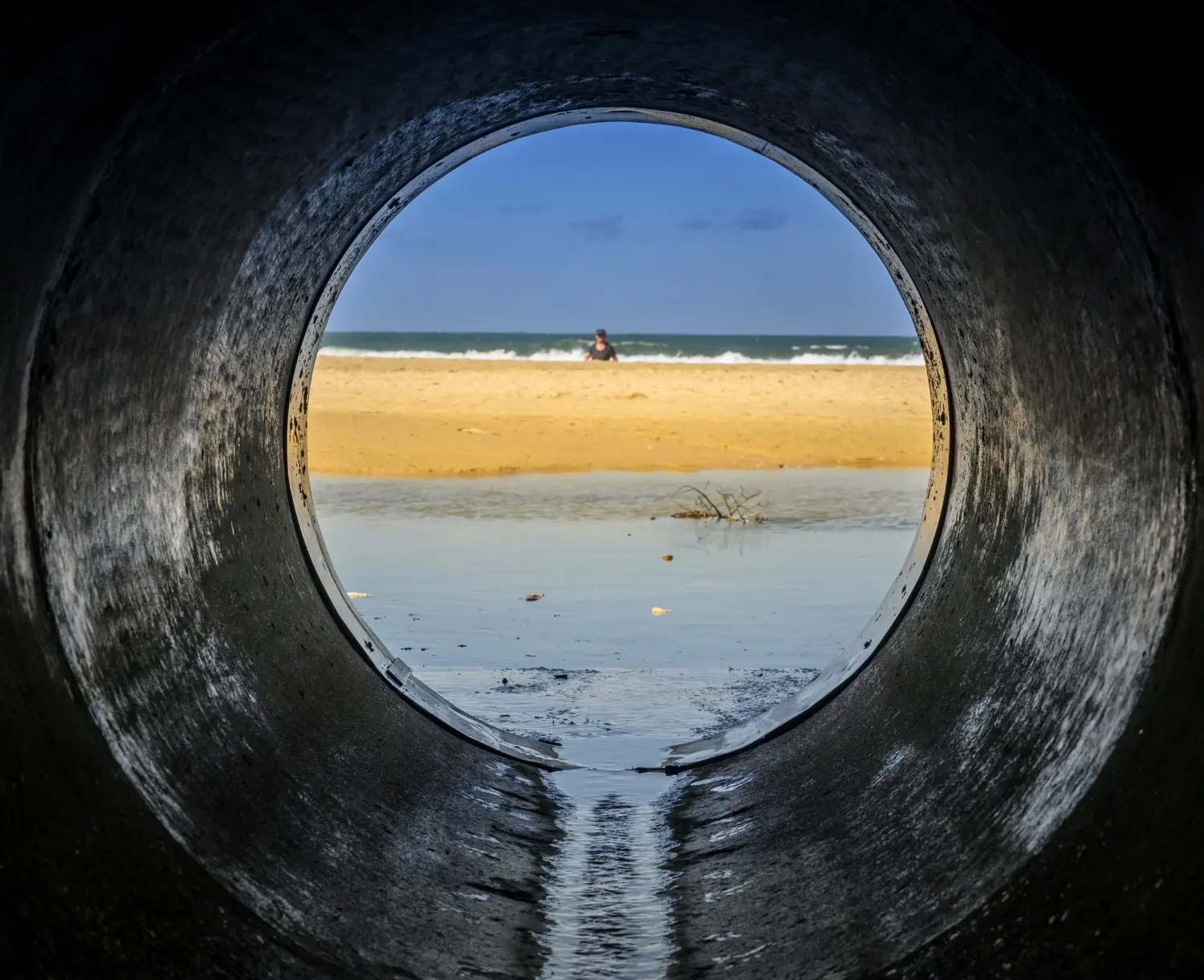
What Is a Cross-Country Pipeline?
A cross-country pipeline is a pipeline system constructed across an extended geographical route to transport a resource between two or more locations.
Depending on the application, the transported material can include:
- Water
- Crude oil
- Refined petroleum products
- Natural gas
- Other industrial fluids
The pipeline can pass through multiple land-use zones and geographical conditions.
A single project may encounter:
- Agricultural land
- Roads
- Highways
- Railway corridors
- Rivers
- Canals
- Urban areas
- Industrial zones
- Uneven terrain
This makes route engineering and construction planning central to the project.
The engineering requirements also vary according to the application. A water transmission pipeline, for example, has different hydraulic and operational considerations from an oil or gas pipeline.
OmYash has previously covered the fundamentals of cross-country pipeline design, construction and applications, including how these systems are used across different infrastructure sectors.
Why Cross-Country Pipeline EPC Requires Integrated Execution
A pipeline is a connected system.
The engineering decisions made at the beginning influence procurement, construction, testing and commissioning later.
For example, pipeline diameter affects hydraulic capacity and material requirements.
Pipeline material affects procurement, jointing, installation and testing.
Route selection affects trenching, crossings, land requirements and construction logistics.
Operating pressure affects pipe specifications, valves, fittings and testing requirements.
Because these factors are interconnected, project execution benefits from coordination across the complete EPC lifecycle.
The EPC model brings together:
Engineering → Procurement → Construction → Testing → Commissioning
For organisations evaluating an EPC contractor, understanding the EPC model in construction provides useful context for how engineering, procurement and construction responsibilities are integrated.
An integrated approach helps ensure that project requirements remain aligned throughout execution.
Engineering and Route Planning
Engineering is the starting point for a cross-country pipeline project.
Before construction begins, the project team needs to understand the proposed route and the technical requirements of the pipeline.
Route planning can involve evaluation of:
- Terrain
- Existing infrastructure
- Road crossings
- Railway crossings
- Water crossings
- Agricultural areas
- Industrial zones
- Environmental constraints
- Access requirements
- Land availability
The pipeline route needs to balance technical feasibility with constructability.
A theoretically short route may not always be the most practical route if it creates significant crossing or construction challenges.
For this reason, route engineering needs to consider both the pipeline's operational requirements and the realities of field execution.
For large infrastructure projects, this is also one reason project owners should carefully select an EPC contractor for large infrastructure projects based on relevant technical and execution experience.
Hydraulic Design for Water Pipelines
For water pipelines, hydraulic design is one of the most important parts of engineering.
The system needs to deliver the required flow while accounting for:
- Pipeline length
- Pipe diameter
- Elevation changes
- Friction losses
- Pressure
- Pump head
- Flow velocity
- Operating conditions
For long-distance water transmission systems, these parameters directly influence pump selection and pipeline sizing.
An incorrectly designed pipeline can create excessive pressure losses, inefficient pumping or inadequate flow at the destination.
OmYash's experience with large water-transfer and lift irrigation infrastructure provides a practical connection between pipeline construction and hydraulic infrastructure.
Its portfolio includes projects involving long-distance MS, DI-K9 and HDPE pipelines and associated pumping systems.
This experience is particularly relevant to the broader water infrastructure services offered by OmYash, which include dams, reservoirs, water distribution systems and related infrastructure.
Cross-Country Pipelines for Oil and Gas
Oil and gas pipelines have different operating requirements from water pipelines.
The transported product, operating pressure, safety requirements, material specifications, testing procedures and monitoring requirements all influence the design.
A hydrocarbon pipeline project can involve:
- Route development
- Pipeline engineering
- Pipe procurement
- Welding
- Coating
- Trenching
- Installation
- Valve stations
- Crossings
- Testing
- Commissioning
Safety and quality control are particularly important throughout the construction process.
OmYash's project portfolio includes the HRRL Connectivity Project Pipeline and Associated Works, involving approximately 85 km of 18-inch pipeline along with civil, mechanical, testing and commissioning activities.
This project demonstrates the company's experience extending beyond water infrastructure into hydrocarbon pipeline execution.
OmYash's broader hydrocarbon infrastructure services support projects associated with oil and gas transportation and related infrastructure.
The company has also published technical content on oil and gas pipelines in India, providing additional context on the role of pipeline infrastructure in India's energy network.
Pipeline Material Selection
Pipeline material needs to be selected according to the application and project conditions.
Water infrastructure can use materials such as:
- Mild steel
- Ductile iron
- HDPE
The choice depends on factors including:
- Pressure
- Diameter
- Route conditions
- Installation method
- Soil conditions
- Corrosion considerations
- Expected service life
- Project economics
OmYash's project portfolio includes examples involving MS, DI-K9 and HDPE pipelines.
For example, the Bhasariya to Sametra NMC-Based Lift Irrigation MS Pipeline Project used both MS and HDPE pipeline systems.
The Lift Irrigation DI-K9 Pipeline Project involved approximately 21 km of DI-K9 pipeline.
This range of experience is relevant when evaluating an EPC contractor for a pipeline project because the contractor needs to understand how different materials perform within different infrastructure applications.
For a more detailed comparison of pipeline materials used in water infrastructure, OmYash's resource on DI pipe vs MS pipe for water infrastructure projects provides additional technical context.
Procurement and Supply Chain Management
Pipeline projects require substantial quantities of specialised materials and equipment.
Procurement can include:
- Pipes
- Valves
- Fittings
- Pumps
- Motors
- Flanges
- Instruments
- Electrical equipment
- Construction materials
- Coating systems
Long-distance projects make procurement planning particularly important because construction can extend across multiple work fronts.
Delays in critical materials can affect the entire project schedule.
An EPC contractor therefore needs to coordinate engineering specifications with procurement requirements.
Material quality also needs to be verified against the project specifications before installation.
This integration between engineering and procurement is one of the fundamental reasons why an EPC delivery model can be useful for large infrastructure projects.
Pipeline Construction
Once the engineering and procurement stages are sufficiently advanced, construction can begin.
Pipeline construction typically progresses through a series of coordinated activities.
These can include:
- Route preparation
- Survey and setting out
- Clearing and grading
- Trenching
- Pipe transportation
- Stringing
- Welding or jointing
- Inspection
- Coating or coating inspection
- Lowering and laying
- Backfilling
- Restoration
- Testing
- Commissioning
The exact sequence varies according to pipeline type, terrain, construction method and project requirements.
Long-distance pipeline projects also require multiple construction teams and work fronts to be coordinated efficiently.
Construction planning therefore needs to account for material movement, access, equipment deployment, workforce requirements and the sequence of activities along the pipeline corridor.
Welding and Jointing
For steel pipelines, welding is a critical construction activity.
Each pipeline joint needs to achieve the required mechanical integrity and quality.
Pipeline welding involves:
- Joint preparation
- Alignment
- Welding
- Inspection
- Non-destructive testing
- Coating
- Quality documentation
The specific inspection requirements depend on the project and applicable specifications.
For non-metallic pipelines such as HDPE, the joining method is different and may involve controlled fusion processes.
The joining method therefore needs to be matched to the pipeline material and operating requirements.
Pipeline quality is ultimately dependent on the cumulative quality of individual joints, fittings, valves and installed sections.
Road, Railway and Water Crossings
Crossings are often among the most technically challenging sections of a cross-country pipeline.
A pipeline may need to cross:
- National highways
- State highways
- Local roads
- Railway tracks
- Rivers
- Canals
- Drains
These sections require detailed planning because the pipeline has to be installed without compromising the existing infrastructure or the pipeline itself.
Depending on the location and project requirements, specialised crossing methods may be considered.
The crossing design needs to account for:
- Existing infrastructure
- Soil conditions
- Pipeline depth
- Construction access
- Safety
- Future maintenance
Crossings therefore need to be considered during route engineering rather than treated as a last-minute construction issue.
This becomes particularly important for pipelines passing through densely developed or infrastructure-heavy regions.
Pipeline Testing Before Commissioning
Testing verifies the integrity of the completed pipeline before it is placed into operation.
For many pipeline systems, hydrostatic testing is an important component of commissioning.
The basic principle involves filling the pipeline with water and pressurising it to a specified test condition to verify its integrity.
Testing can help identify:
- Leaks
- Weak joints
- Defects
- Pressure losses
- Construction issues
The exact test procedure and acceptance criteria depend on the pipeline type, project specifications and applicable standards.
OmYash has also published a detailed guide on hydrostatic testing in pipelines, including its process, standards and benefits.
For project owners, testing should be considered part of the pipeline execution strategy from the engineering stage rather than an activity added only after construction.
Testing and Commissioning as Part of EPC Delivery
Testing should not be viewed as an isolated final activity.
It is part of the overall project quality process.
For a cross-country pipeline, commissioning can involve several stages, including:
- Pipeline inspection
- Pressure testing
- Flushing
- Cleaning
- Instrument checks
- Valve checks
- Pump testing
- Control-system verification
- Functional testing
For water pipelines, the system may also require flushing and disinfection depending on its intended application.
For hydrocarbon pipelines, commissioning procedures are determined by the product, pipeline configuration and applicable project requirements.
OmYash's project experience includes testing and commissioning as part of large pipeline infrastructure projects.
Its detailed guide on pipeline testing methods before commissioning further explains why testing is an essential part of pipeline delivery.
Operation and Maintenance of Cross-Country Pipelines
Construction is only the beginning of a pipeline's lifecycle.
Once commissioned, a pipeline requires monitoring and maintenance to ensure continued performance.
Depending on the system, maintenance activities can include:
- Pipeline inspection
- Valve inspection
- Pump maintenance
- Pressure monitoring
- Leak detection
- Corrosion monitoring
- Instrumentation checks
- Repair of damaged sections
- Preventive maintenance
For water infrastructure, pumping efficiency can also have a significant effect on operating costs.
For hydrocarbon pipelines, monitoring and integrity management become especially important due to the nature of the transported product.
Several OmYash infrastructure projects include long-term O&M responsibilities, demonstrating the importance of considering asset performance beyond the construction stage.
Cross-Country Pipeline Projects in Water Infrastructure
Water transmission is one of the major applications of long-distance pipelines in India.
Water may need to be transferred from:
- Reservoirs
- Dams
- Rivers
- Treatment plants
- Storage facilities
to:
- Distribution networks
- Irrigation systems
- Tanks
- Industrial facilities
- Urban water systems
OmYash has executed several projects involving these types of water-transfer systems.
Its major infrastructure project portfolio includes projects such as the Dindrol to Mukteshwar Reservoir Lift Irrigation Pipeline Project, Meghraj-Malpur Lift Irrigation Project, Jalampura to Watrak Dam MS Pipeline Project and Satola Village to Satlasana and Kheral Talukas Tank Linking Pipeline Project.
These projects demonstrate how pipeline engineering becomes closely connected with pumping and water-resource management.
For organisations evaluating water infrastructure requirements, OmYash's resource on water infrastructure companies in Ahmedabad provides additional context on the engineering and infrastructure requirements involved.
Cross-Country Pipeline Projects for Irrigation
Irrigation infrastructure often requires water to be transported over significant distances and elevation differences.
Lift irrigation systems add another engineering challenge because pumps are required to overcome the elevation difference between the source and destination.
A complete system can therefore involve:
Source → Intake → Pumping Station → Rising Main → Transmission Pipeline → Storage/Distribution
Every component needs to operate together.
OmYash's experience includes multiple lift irrigation projects across Gujarat, including reservoir-linking and tank-linking pipeline systems.
Its technical resource on river lift irrigation systems explains the role of pumping stations, pipelines and other components in these systems.
The company also provides lift irrigation and pumping machinery services, connecting pipeline execution with the pumping infrastructure required to move water across elevation differences.
Cross-Country Pipeline Infrastructure and Gujarat
Gujarat has significant requirements for both water and industrial pipeline infrastructure.
Water pipelines support irrigation and regional water distribution.
Industrial pipelines support manufacturing, energy and hydrocarbon infrastructure.
The state's industrial ecosystem also creates requirements for infrastructure connecting production facilities, storage facilities and transportation networks.
This makes cross-country pipeline EPC a multidisciplinary infrastructure requirement rather than a standalone construction activity.
OmYash's experience across water, irrigation, industrial and hydrocarbon projects allows it to work across these different applications.
Its Ahmedabad base also places the company within Gujarat's wider infrastructure ecosystem, while its project portfolio extends beyond Gujarat into other parts of India.
Cross-Country Pipeline EPC for Industrial Infrastructure
Industrial infrastructure frequently depends on reliable pipeline systems.
Pipelines can connect:
- Water sources
- Treatment plants
- Storage facilities
- Manufacturing facilities
- Fuel infrastructure
- Processing units
- Distribution systems
The engineering requirements depend on what the pipeline is transporting and the conditions under which it will operate.
In an industrial EPC project, pipeline infrastructure may also need to be integrated with electrical, mechanical, instrumentation and control systems.
This is particularly relevant for hydrocarbon infrastructure, where pipeline systems can form part of a larger industrial facility.
OmYash's experience in industrial and hydrocarbon infrastructure includes its Shell India Ltd. Pragpar-Mundra project, which included civil, electrical, mechanical, instrumentation and SCADA works.
This broader multidisciplinary capability is important when pipeline construction forms one component of a larger industrial EPC scope.
How to Select a Cross-Country Pipeline EPC Contractor
Selecting a pipeline EPC contractor requires evaluation beyond basic construction capacity.
The contractor's experience should be considered in relation to the specific pipeline being planned.
Important questions include:
- Has the contractor executed pipelines of comparable length?
- Has it worked with the required pipe material?
- Has it executed similar diameters?
- Does it have experience with road and railway crossings?
- Can it manage testing and commissioning?
- Does it have experience with pumping infrastructure?
- Has it executed water or hydrocarbon pipelines similar to the proposed application?
- Can it support long-term operation and maintenance?
Project owners can also examine completed project values, pipeline lengths and technical scope.
OmYash's project portfolio provides examples across water, irrigation, pipeline and hydrocarbon infrastructure.
For a broader evaluation framework, OmYash's guide on how to select an EPC contractor for large infrastructure projects covers the factors project owners should examine before appointing an EPC partner.
OmYash's Cross-Country Pipeline EPC Capabilities
OmYash Projects approaches cross-country pipelines through an integrated EPC framework.
Its pipeline and infrastructure services cover cross-country pipeline design and construction for water, oil and gas, together with maintenance and monitoring.
The company's experience includes large water pipelines, lift irrigation systems and hydrocarbon connectivity.
This allows different pipeline requirements to be considered within a broader infrastructure framework.
For a water-transfer project, the scope may involve pumping stations, pipelines, civil structures and long-term O&M.
For a hydrocarbon pipeline, the scope may include route construction, mechanical works, testing and commissioning.
In both cases, the objective is to deliver a functioning pipeline system rather than simply install pipe.
From Engineering to Long-Term Performance
The success of a cross-country pipeline should ultimately be considered across its complete lifecycle.
That means engineering decisions need to account for the entire asset.
Pipeline diameter affects hydraulic performance.
Material selection affects durability.
Route planning affects maintenance access.
Construction quality affects pipeline integrity.
Testing verifies the completed system.
Instrumentation supports monitoring.
Preventive maintenance supports long-term performance.
This lifecycle perspective is particularly important for infrastructure assets expected to operate for decades.
It is also why an EPC contractor's experience should be evaluated across the complete project lifecycle rather than solely on construction capability.
OmYash Projects: Pipeline Engineering Across Infrastructure Sectors
OmYash's pipeline experience extends across several infrastructure applications.
Its water and irrigation projects demonstrate experience with long-distance water transmission, pumping systems, reservoirs and distribution infrastructure.
Its hydrocarbon projects demonstrate experience with industrial pipeline construction and associated civil and mechanical works.
This combination creates an EPC profile that connects pipeline engineering with the wider infrastructure systems in which pipelines operate.
The company's infrastructure services and project portfolio provide the most direct view of these capabilities.
Its supporting technical resources on pipeline construction challenges, pipeline testing and hydrostatic testing further develop the technical knowledge around pipeline execution.
Conclusion
Cross-country pipeline projects are complex infrastructure systems connecting distant locations through carefully engineered networks.
Whether the application involves water transmission, irrigation, oil or gas, successful execution requires coordinated engineering, procurement, construction, testing and commissioning.
For water projects, hydraulic design and pumping systems need to work together with pipeline infrastructure.
For hydrocarbon projects, pipeline integrity, construction quality, testing and safety requirements become particularly important.
OmYash Projects brings experience across these different infrastructure applications, with project execution spanning water pipelines, lift irrigation, reservoir connectivity and hydrocarbon pipeline infrastructure.
Its cross-country pipeline EPC services, combined with its broader EPC infrastructure capabilities and project portfolio, provide a foundation for organisations planning large-scale pipeline infrastructure.
For organisations evaluating an EPC contractor for a cross-country water, irrigation, oil or gas pipeline, the most important consideration is whether the contractor's engineering and execution experience matches the technical requirements of the proposed project.
Organisations planning a pipeline infrastructure project can explore OmYash Projects' complete services, review its ongoing and completed projects, or contact the company through its official contact page.
Frequently Asked Questions
What are cross-country pipeline EPC services?
Cross-country pipeline EPC services cover the engineering, procurement and construction of long-distance pipeline infrastructure. Depending on the project, the scope can also include testing, commissioning, maintenance and monitoring.
Does OmYash execute cross-country pipelines?
Yes. Cross-country pipeline design and construction for water, oil and gas are included within OmYash Projects' infrastructure service capabilities.
What types of pipelines does OmYash work with?
OmYash's project portfolio includes MS, DI-K9 and HDPE pipelines for water and irrigation infrastructure, as well as hydrocarbon pipeline infrastructure.
What is involved in a cross-country pipeline project?
A cross-country pipeline project can involve route engineering, surveying, procurement, trenching, pipe installation, welding or jointing, crossings, testing, commissioning and long-term maintenance.
Does OmYash execute hydrocarbon pipeline projects?
Yes. OmYash's project portfolio includes the HRRL Connectivity Project Pipeline and Associated Works, involving approximately 85 km of 18-inch pipeline along with civil, mechanical, testing and commissioning works.
Why is testing important for cross-country pipelines?
Testing verifies the integrity and performance of the completed pipeline before operation. Depending on the project, testing can include hydrostatic pressure testing, inspection, flushing, instrumentation checks and functional verification.
How do I select a cross-country pipeline EPC contractor in India?
The contractor should be evaluated based on relevant pipeline length, diameter, material, application, terrain, crossing experience, testing and commissioning capability, and experience with similar water or hydrocarbon infrastructure.
Does OmYash provide pipeline maintenance services?
Yes. OmYash's cross-country pipeline service offering includes maintenance and monitoring in addition to pipeline design and construction.